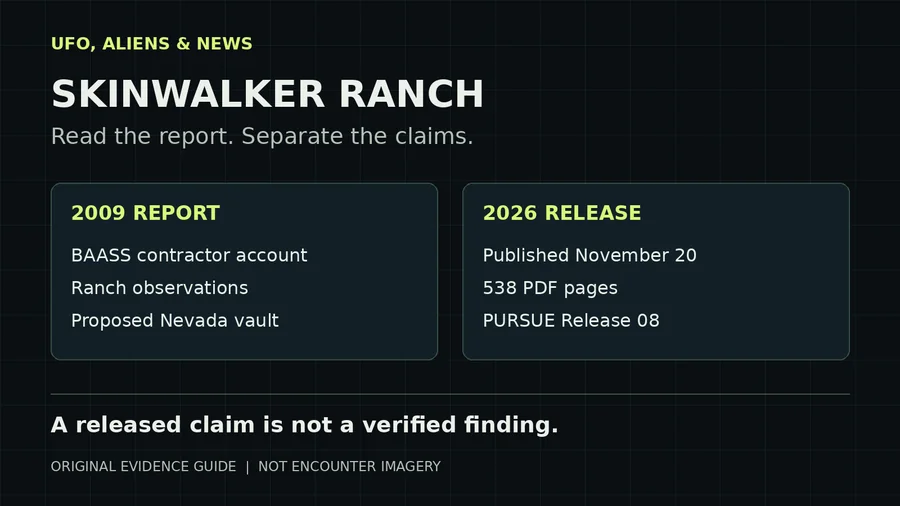
 Released record and attributed claims
Skinwalker Ranch report: what the released file says
The 538 page BAASS report records ranch observations, a proposed Nevada vault and claims about recovered material. The release does not verify those claims.
Government records, instrument data and the search for life. Explore what is measured, what is inferred, and what remains unresolved.
Searching for life beyond Earth and investigating unidentified observations require different evidence. This collection brings the subjects together without assuming they have the same explanation. An atmospheric spectrum, a radio signal, a Navy sensor recording and a witness statement each pose a different measurement problem. The useful first question is what the instrument or observer actually recorded.
Our biology coverage separates a potentially habitable environment from evidence that organisms inhabit it. Candidate biosignatures need tests against nonbiological alternatives. Technosignature searches ask whether a signal or artifact is best explained by technology, with attention to interference and independent observations. A search that detects nothing places limits on the targets, frequencies and observing window studied; it does not settle whether life exists elsewhere.
For UAP reports, the guides below examine provenance, distance, viewing geometry and access to the underlying data. An official release can authenticate footage without identifying its subject. Read the original study or assessment linked in each article and check the distinction between a preprint, an institutional statement and a reviewed result. The dated cards retain the publication history of our coverage. The reading paths below provide starting points for both alien life research and the analysis of reports closer to home.
No confirmed discovery is established by the sources reviewed here. In its UAP FAQ, updated October 8, 2026, NASA says it has found no credible evidence of extraterrestrial life and no evidence that UAP are extraterrestrial. That is the agency’s stated evidence position. Research continues across several distinct kinds of observation.
Biosignature research examines possible traces of biology; technosignature searches look for signs of technology. A potentially habitable environment, a candidate molecule and a confirmed living source are different findings. NASA’s search-for-life overview explains why atmospheric candidates need follow-up and multiple lines of evidence to exclude false positives.
An authenticated recording establishes a source record. Identifying what it shows requires further analysis. An unresolved report may lack the measurements needed to test an explanation; its status alone does not establish an extraordinary origin.
Source positions checked October 13, 2026. These reading paths organize our coverage; they do not independently confirm a discovery. Browse the reports and studies below.
46 stories
Released record and attributed claimsThe 538 page BAASS report records ranch observations, a proposed Nevada vault and claims about recovered material. The release does not verify those claims.
 Research analysis
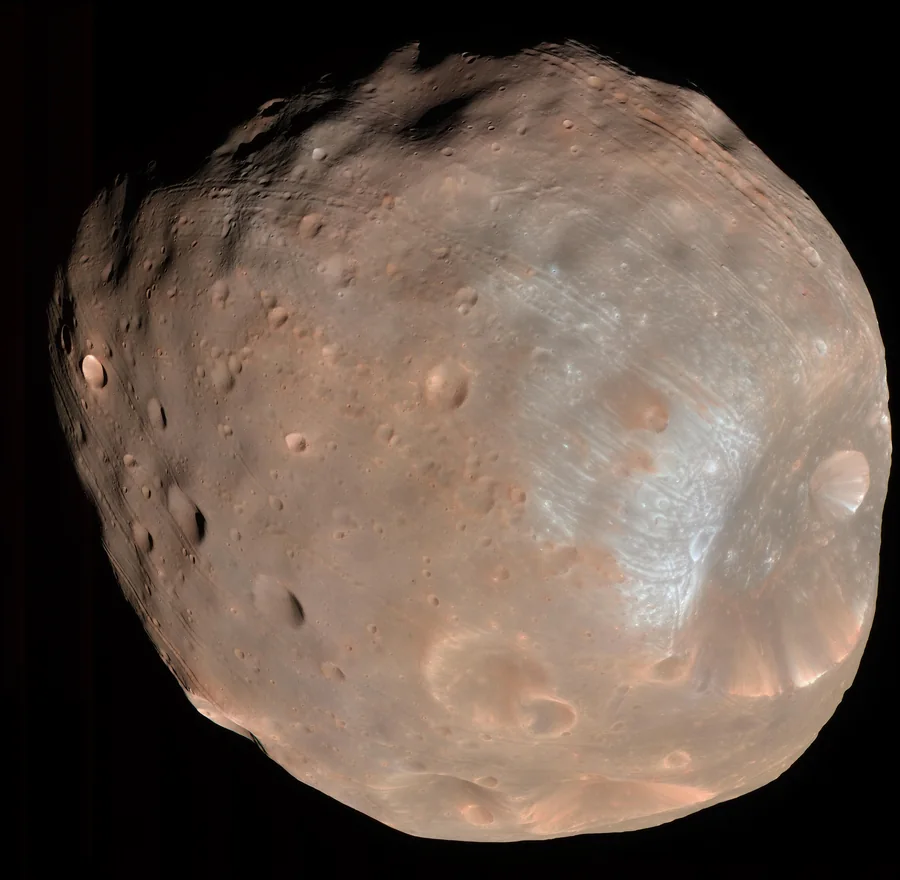
Thermal modeling makes long lived buried water unlikely as the source of the object’s acceleration. A separate spacecraft hypothesis remains unproven, and a 2031 rendezvous could test the object directly.
 Research plan
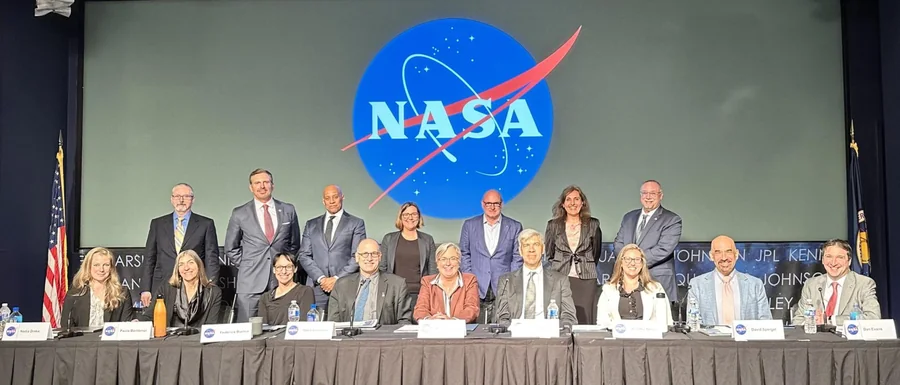
Avi Loeb says a funded facility will pair passive radar with a large optical telescope. Construction is planned, but the system has not produced data or findings.
 On record statement
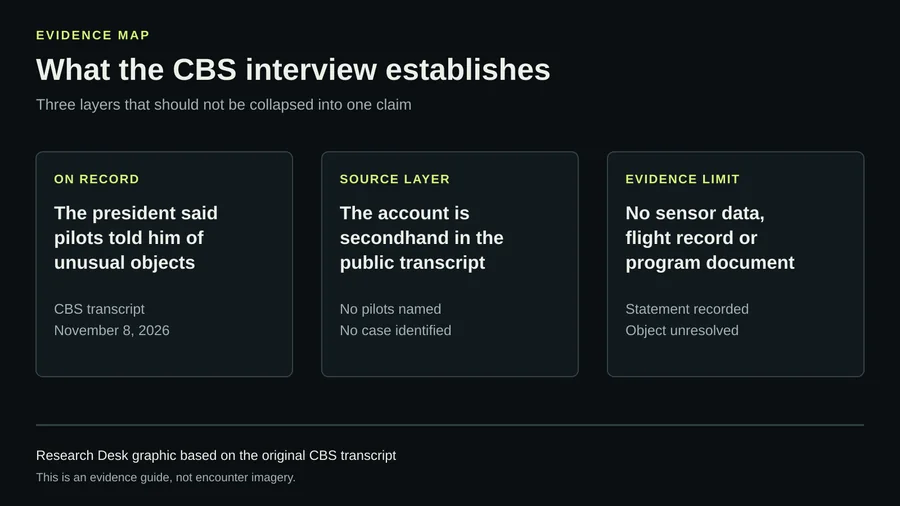
The president relayed an account he said came from Air Force pilots. He supplied no names, dates or records, and denied personal knowledge of a hidden program.
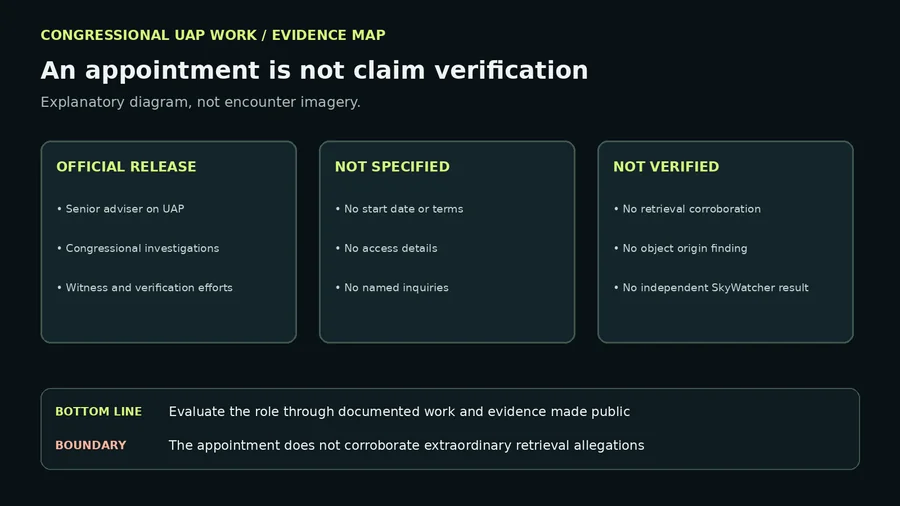 Official staffing update
Burlison’s office confirms Barber is a senior adviser on UAP and says he will assist investigations, witness engagement and efforts to independently verify evidence related to UAP. The appointment does not verify Barber’s retrieval claims.
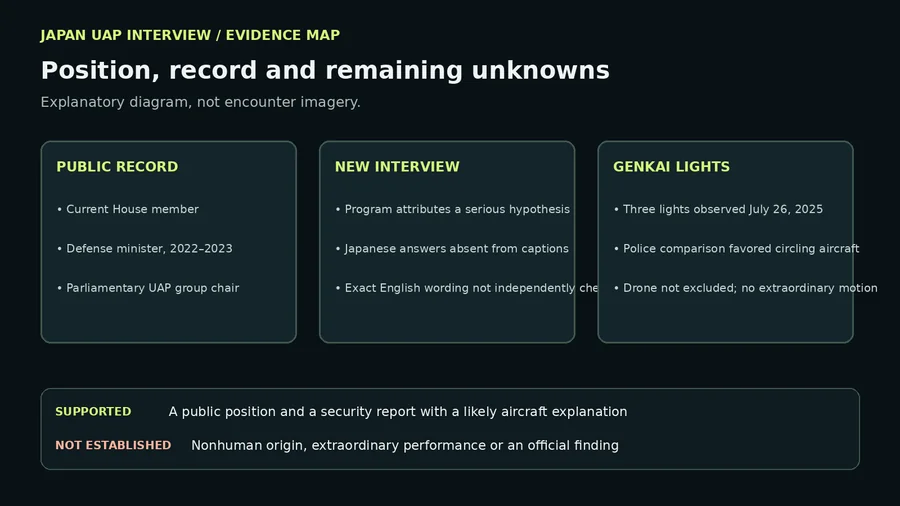 Attributed position · evidence review
A new American Alchemy episode presents Hamada’s view that nonhuman visitation should be considered. Japanese records verify his role; a later police comparison favored circling manned aircraft for the Genkai lights, not a nonhuman cause.
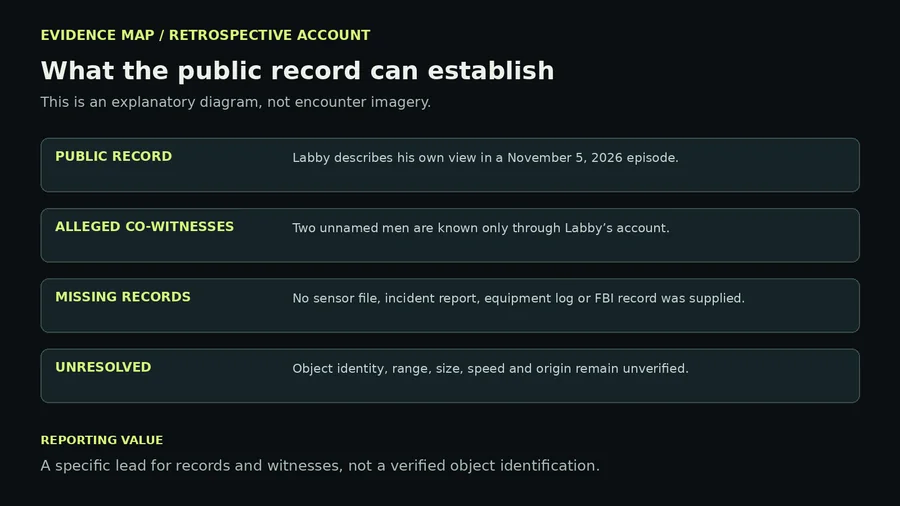 Firsthand account · evidence review
Labby describes a silent object that he says three men viewed through night-vision goggles over Schriever Air Force Base. The retrospective account lacks public sensor data, a contemporaneous report or statements from the other alleged witnesses.
 Research brief · non-detection
The search tested a predictable signaling point; every pilot detection matched human interference.
Research analysisExoMars observations add evidence for possible heat-driven activity below Mars. They do not show an eruption, directly detect magma or establish life.
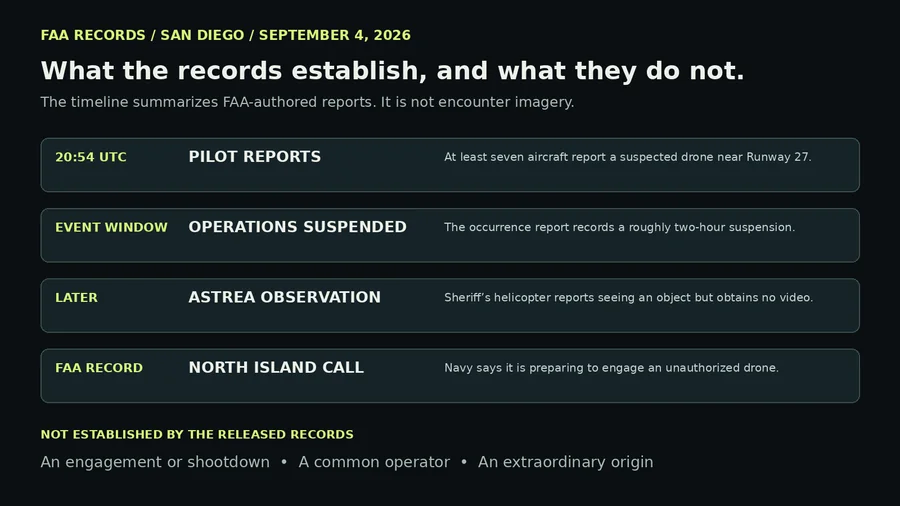 Records analysis
Newly published FAA records document multiple pilot reports, a roughly two-hour suspension of operations and a Navy call about an unauthorized drone. They do not confirm a shootdown or an extraordinary explanation.
News analysisA source-led reading of the Sunday Morning report separates public opinion, witness testimony, released records and scientific advice.
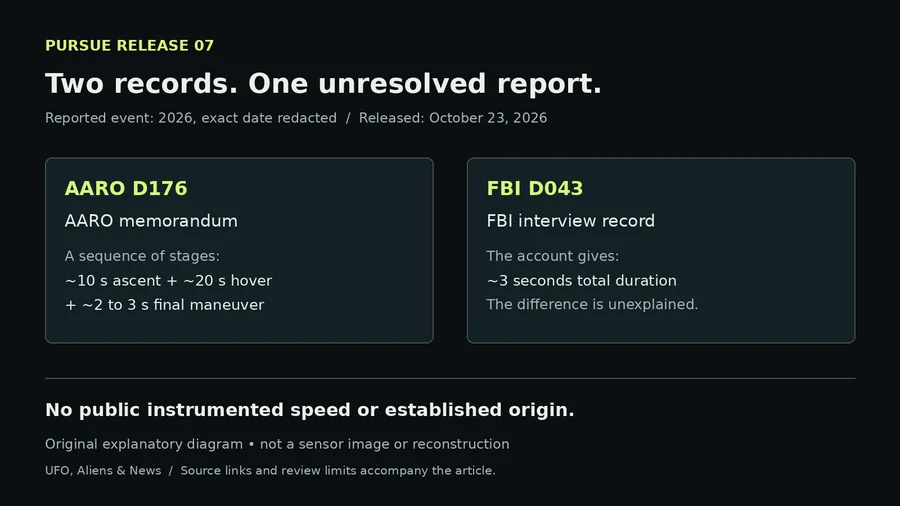 Expert commentary · analysis
The paired FBI and AARO files preserve conflicting times and estimated motion. Our comparison separates witness accounts from measurements and object identification.
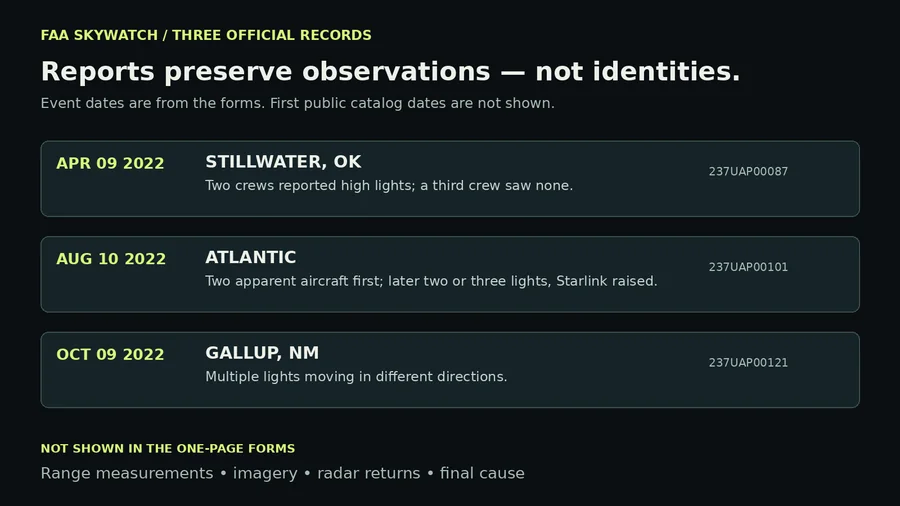 Records analysis
Official one-page reports preserve multiple-light observations near Gallup, over the Atlantic and near Stillwater. One crew raised Starlink; none identifies extraordinary technology.
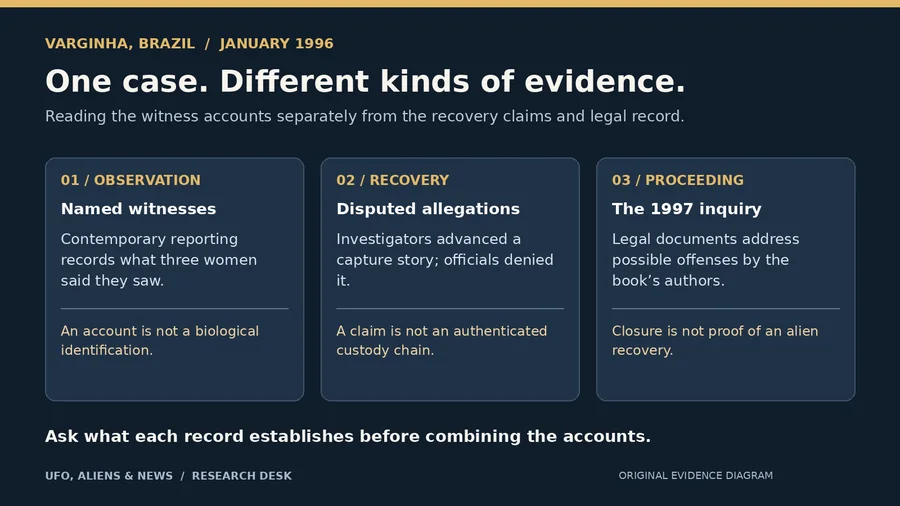 Evidence review · historical case
An evidence review separates the three women’s account, investigators’ recovery claims and what Brazil’s 1997 military criminal inquiry actually decided.
 Evidence review · historical case
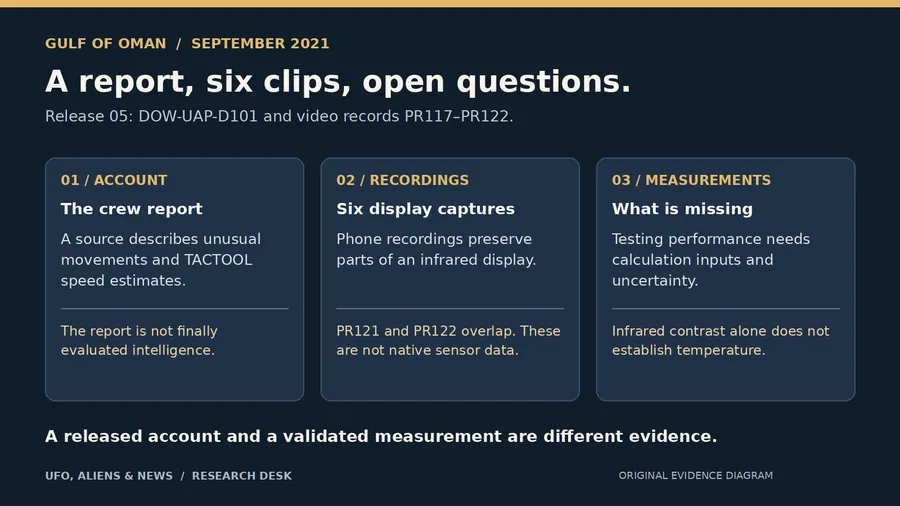
Release 05 preserves a military crew’s account and six phone recordings of an infrared display. The records do not independently establish the objects’ identity, temperature or reported flight performance.
 Record guide · analysis
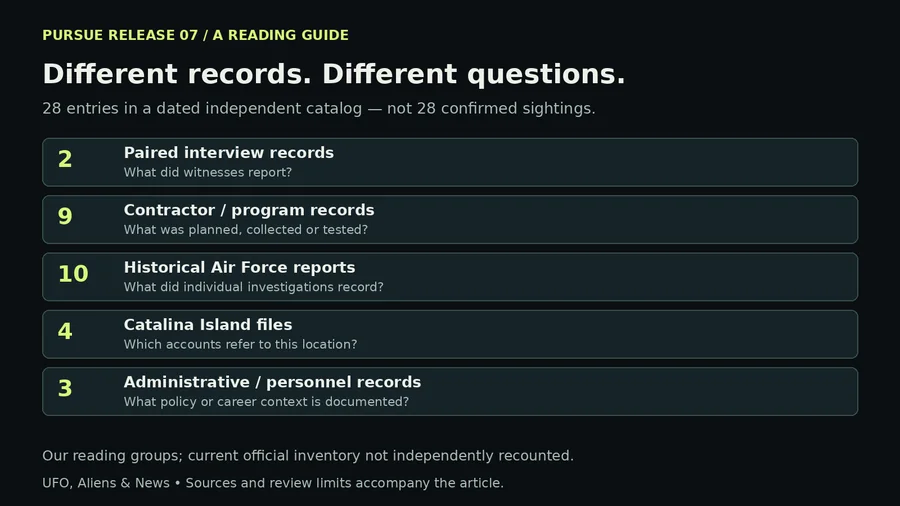
A five-group map separates interview records, contractor work, historical reports and administrative files, and explains which conclusions each can support.
 Interview analysis
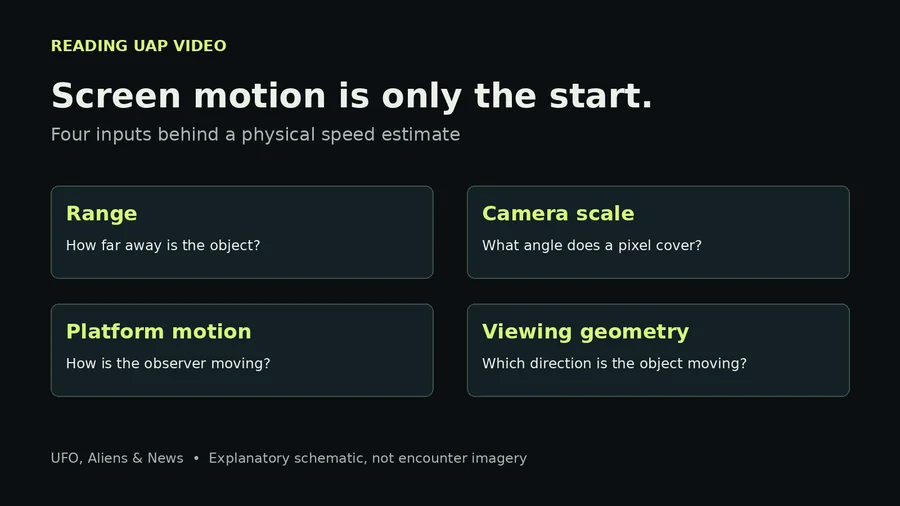
An October 29 interview revisits an August preprint on 112 videos. Moving pixels alone cannot establish an object’s physical speed, or identify what it is.
 Released records · attributed accounts
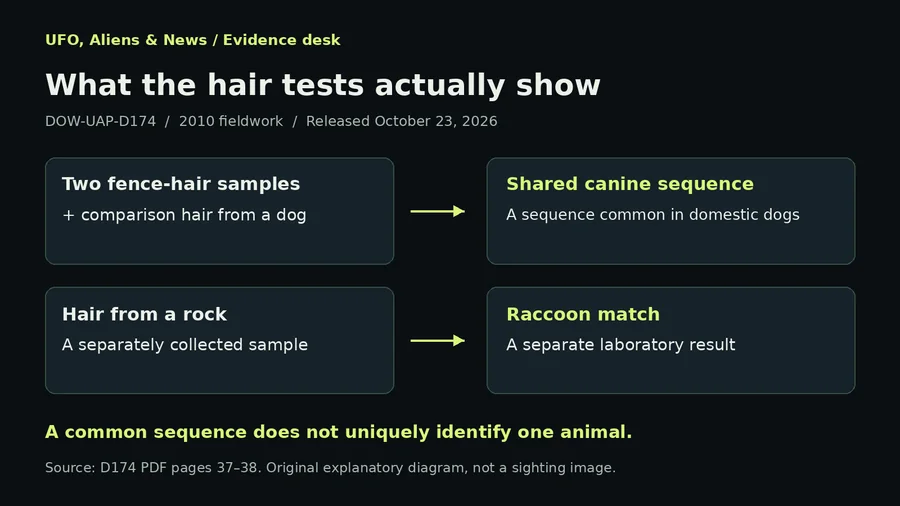
A 2010 contractor report records upright animal-like figures. Its laboratory pages identify canine and raccoon material, without establishing an unknown species.
Research analysisAn October 28 study challenges reliable delivery of concentrated prebiotic chemicals to early Earth. It does not establish how life began or rule out life elsewhere.
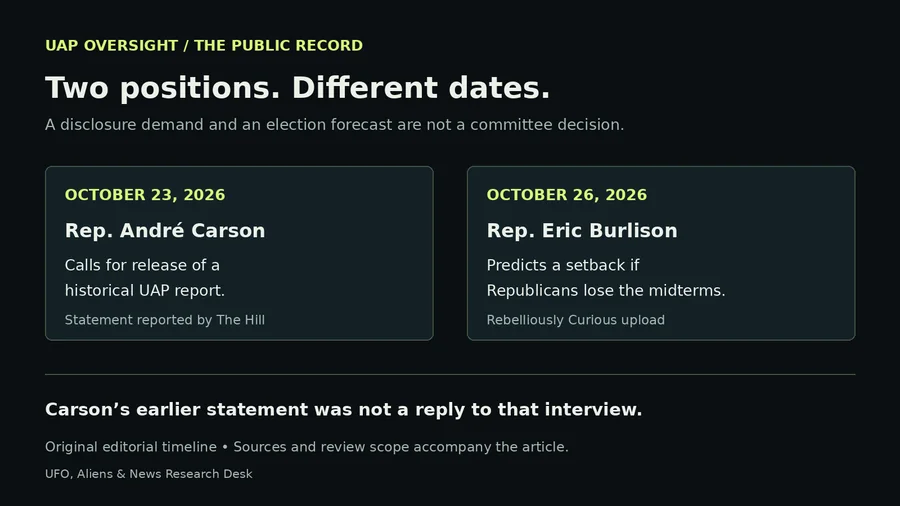 Attributed claims
An October 26 interview and an earlier Carson statement show different political assessments. Neither establishes what Congress will do after the election.
Attributed claimsThe NewsNation interview describes a proposal, not a deployed program. Here is what useful measurements would need to establish.
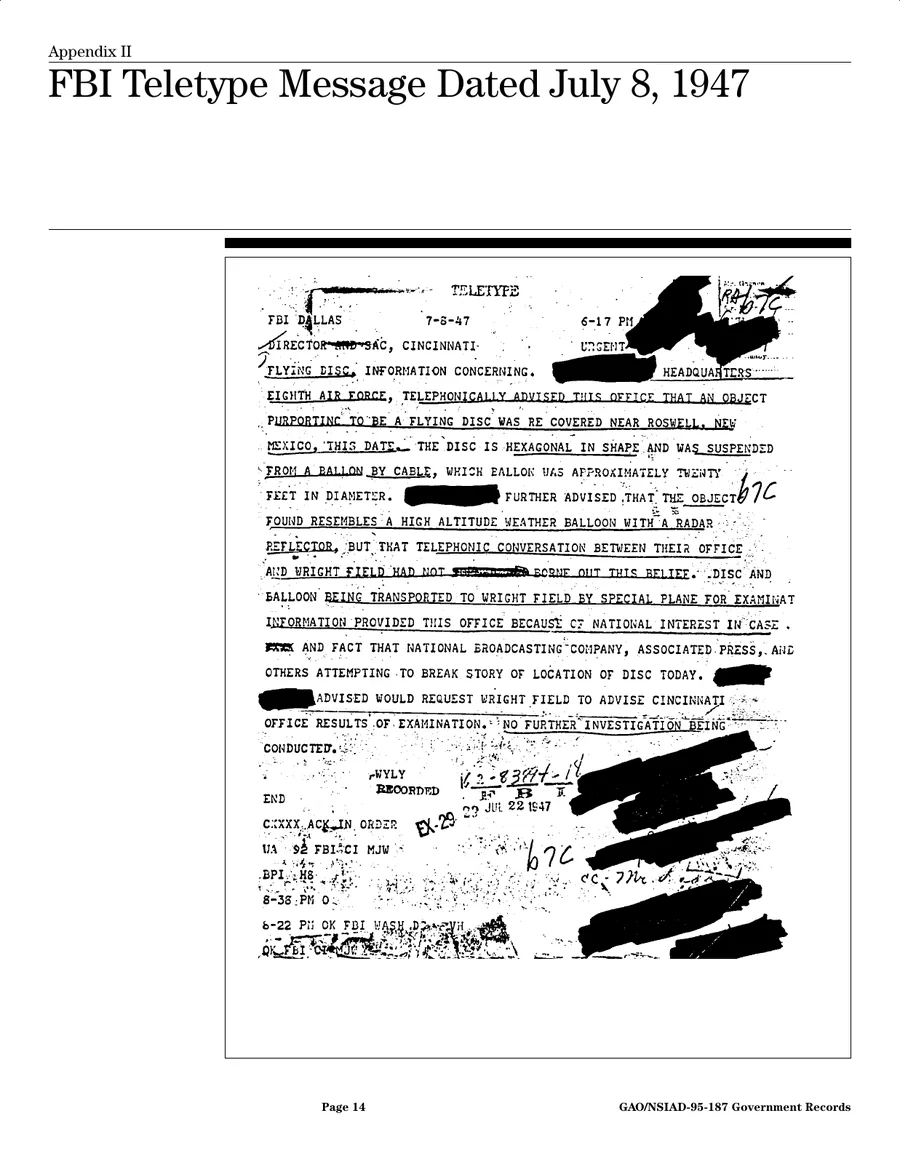 Interview analysis
A retired lawyer recounts an unnamed client’s story. We compare the interview with the documented congressional inquiry and explain what would be needed to corroborate the account.
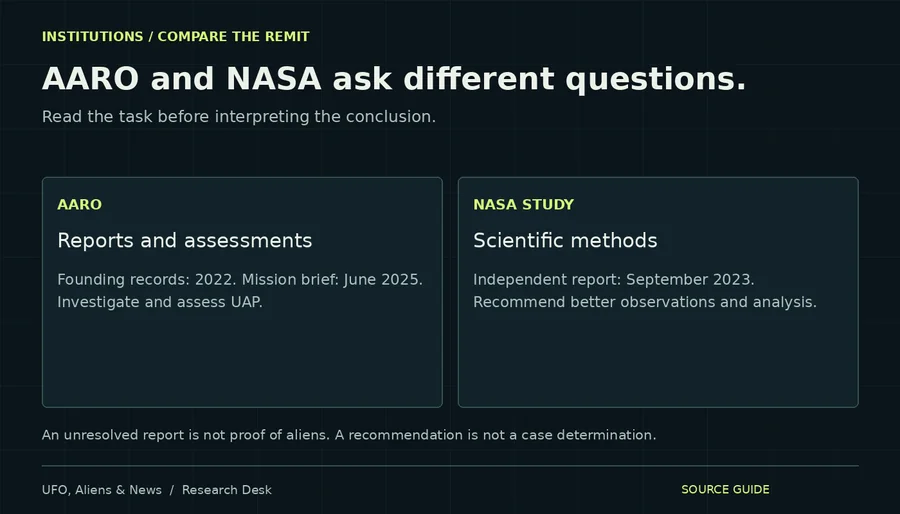 Institutional explainer
Meet the All-domain Anomaly Resolution Office, distinguish its work from NASA’s study and learn what an unresolved case does, and does not, mean.
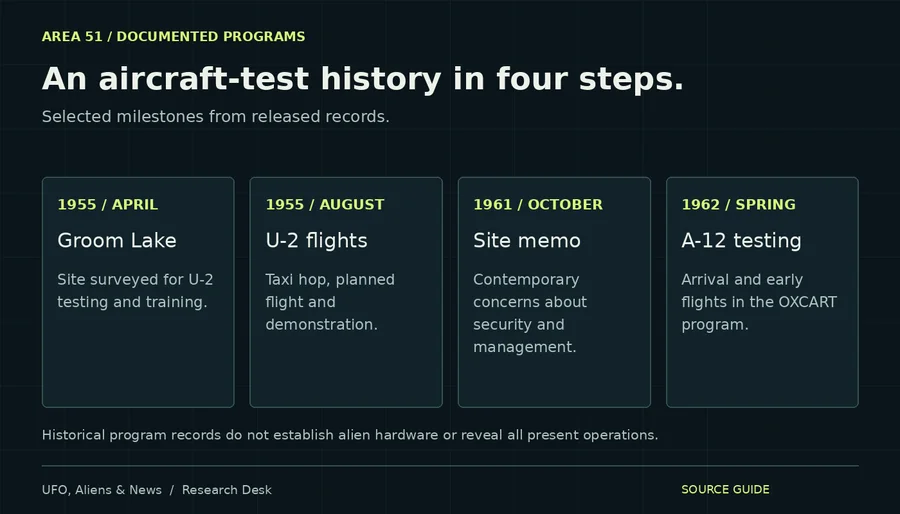 Declassified history
Follow Groom Lake’s U-2 and A-12 history through released records, then separate that documented work from claims about extraterrestrial hardware.
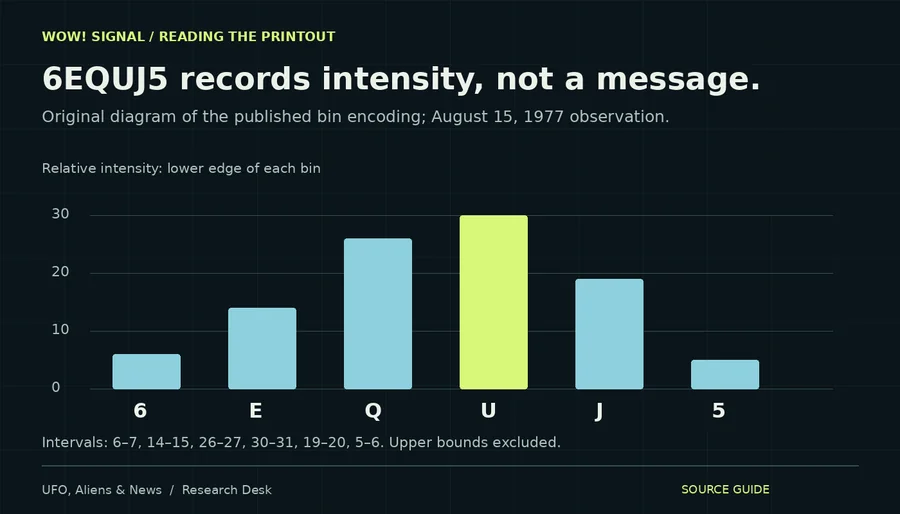 Signal evidence guide
Read the 1977 observation, decode the printout’s intensity labels and see what later searches and archival studies actually tested.
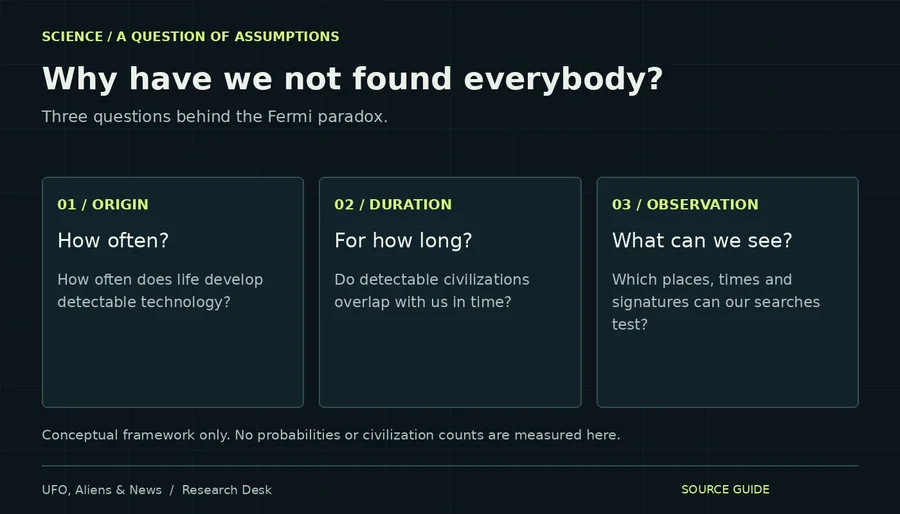 Scientific question
An old galaxy, possible civilizations and no confirmed detection: examine the assumptions connecting those ideas before choosing an explanation.
Evidence guideSeparate the possibility of life beyond Earth, candidate scientific discoveries and claims of alien visitors. A sourced guide to what is known and what remains open.
Record reviewThe paired FBI and AARO records preserve federal witnesses’ accounts. Conflicting clock times and durations, estimated dimensions and no instrumented speed measurement limit what they establish.
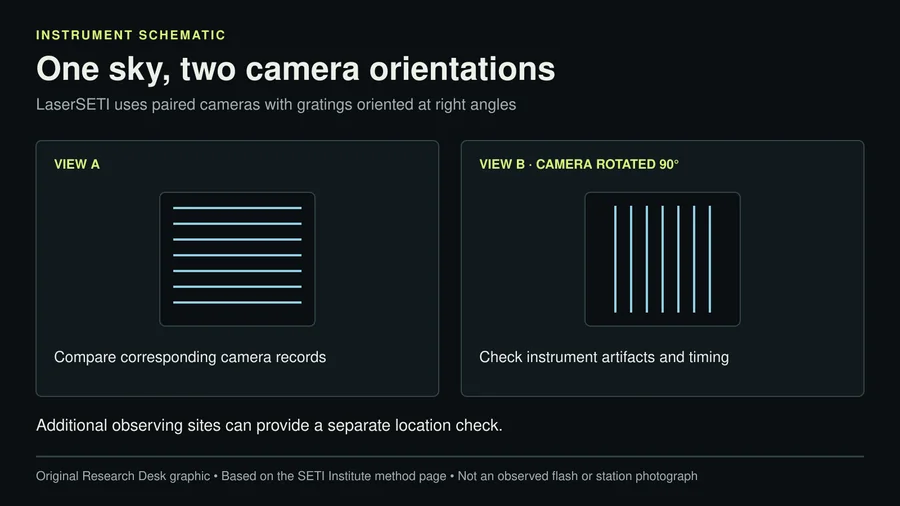 Observatory update
Two optical stations expand the network into Asia. The milestone increases observing coverage; it is not a detected technosignature.
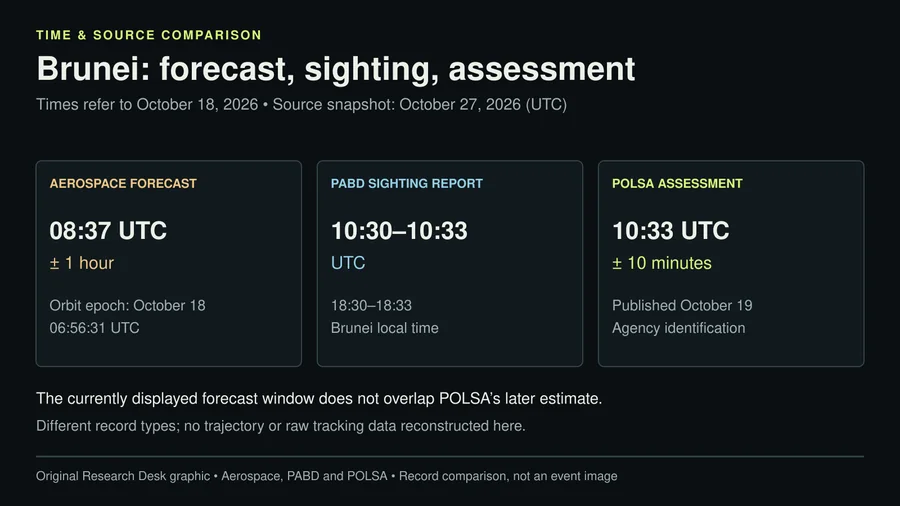 Evidence explainer
Compare a reentry forecast, Brunei sighting reports and POLSA’s rocket-body assessment. The currently displayed forecast and the agency’s time windows do not overlap.
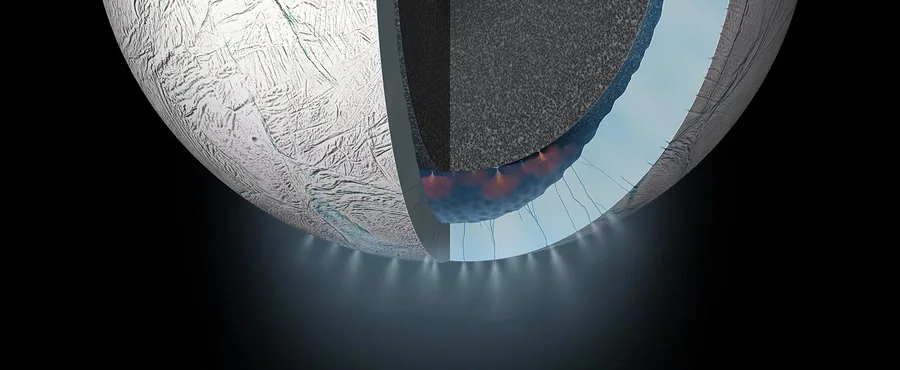 Research explainer
A source-led explainer separates spacecraft measurements, laboratory evidence and the tests a future mission would still need.
Mission updateJAXA says MMX completed its initial critical operations and secured spacecraft health. Instrument checks, Mars cruise, Phobos sampling and sample return remain ahead.
Preprint reviewA research review separates measured plume chemistry, possible ecosystems and the evidence still needed to establish life.
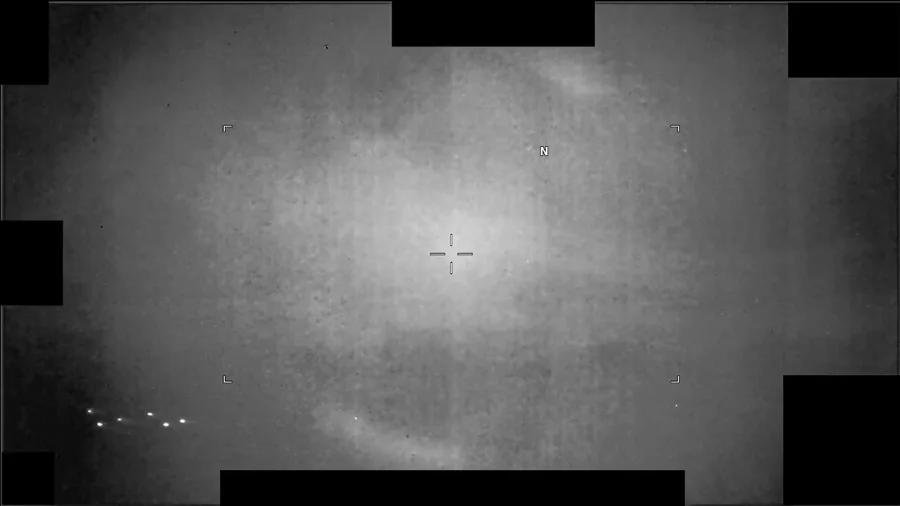 Preprint analysis
An official infrared video remains labeled unresolved. A reproducible preprint finds independent 7.1 to 7.9 Hz flicker in all six objects and argues that parallax inflated their reported speed.
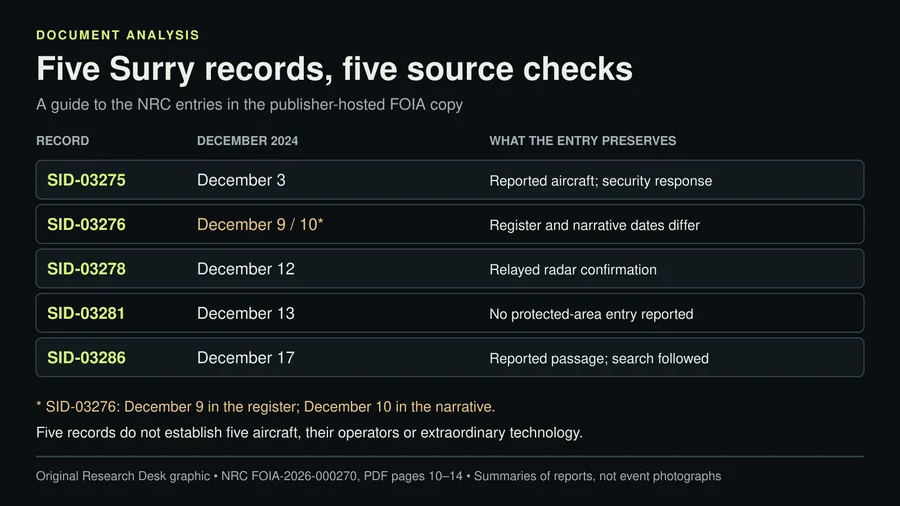 Records analysis
Five December 2024 entries document reported aircraft, security responses and unresolved questions. Their dates, attribution and status fields need careful reading.
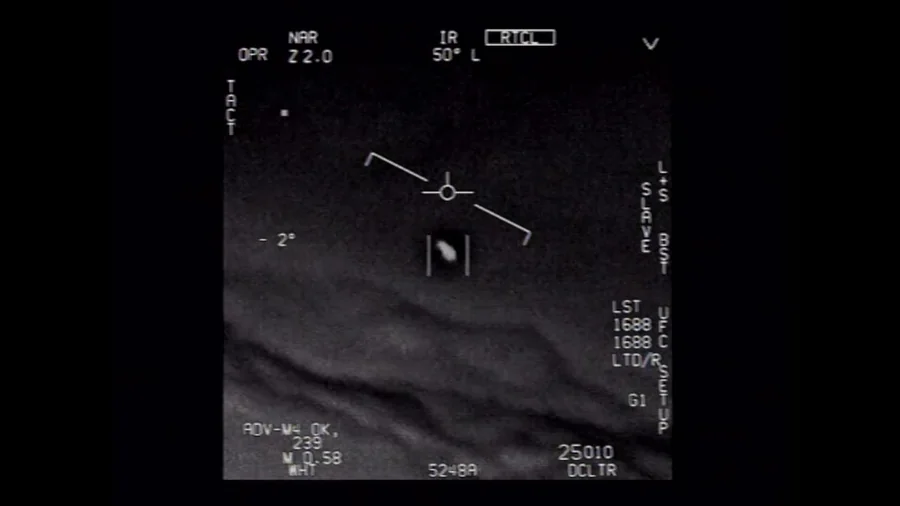 Evidence guide
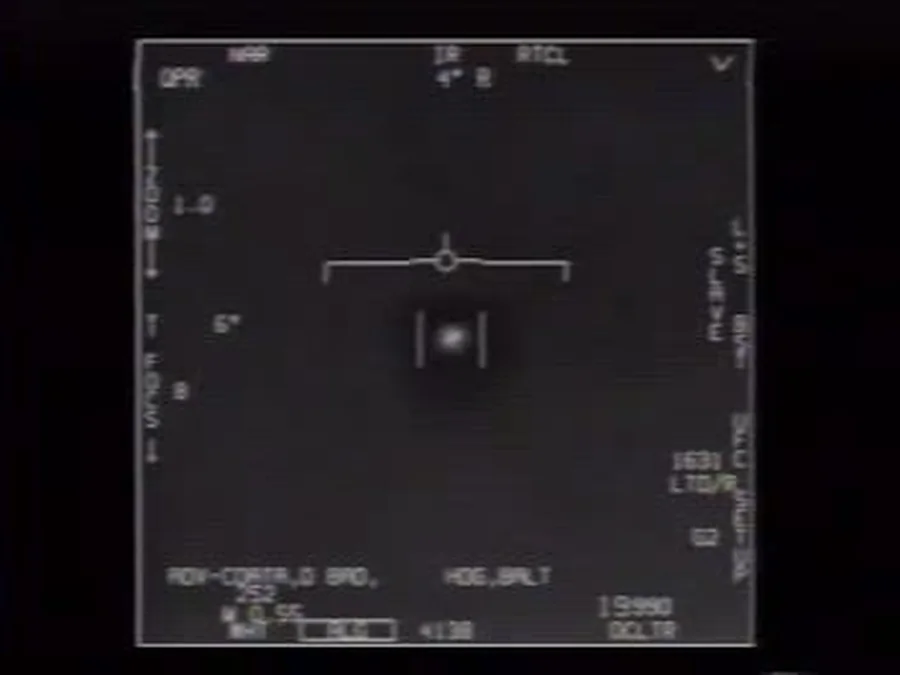
The 34-second Navy recording is authentic government footage. Authenticity establishes provenance, not the object’s distance, speed, identity or origin.
 Evidence guide
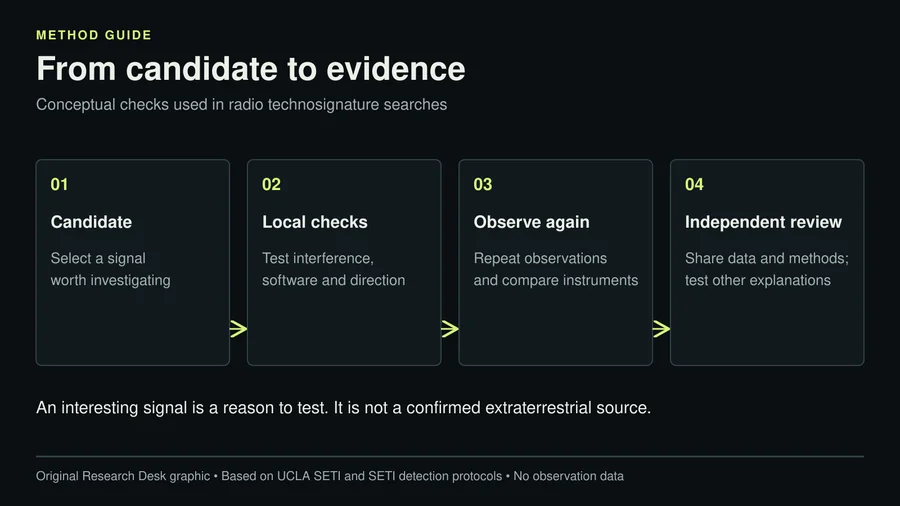
A signal worth investigating is the beginning of a test. Interference checks, independent observations and a transparent evidence record determine what comes next.
 Research proposal · preprint
A SETI Live recording examines a proposed search for microscopic engineered particles. The underlying preprint reports no discovery of extraterrestrial technology.
Official records guideOpen nine agency collections and their metadata, find the original UFO records, and distinguish a document release from a verified explanation.
 Evidence guide
Read the 2004 encounter through separate records: David Fravor’s testimony, Chad Underwood’s later recording and the Pentagon’s release notice.
Official reportThe July 2026 release adds a new reporting window, and another reminder to separate an unexplained observation from an extraordinary explanation.
Case analysisAARO’s case analysis found no anomalous performance. It stopped short of definitively identifying the object.
Scientific frameworkCalibrated sensors, useful metadata, and independent observations give an unexplained encounter a path toward investigation.
 Research debate
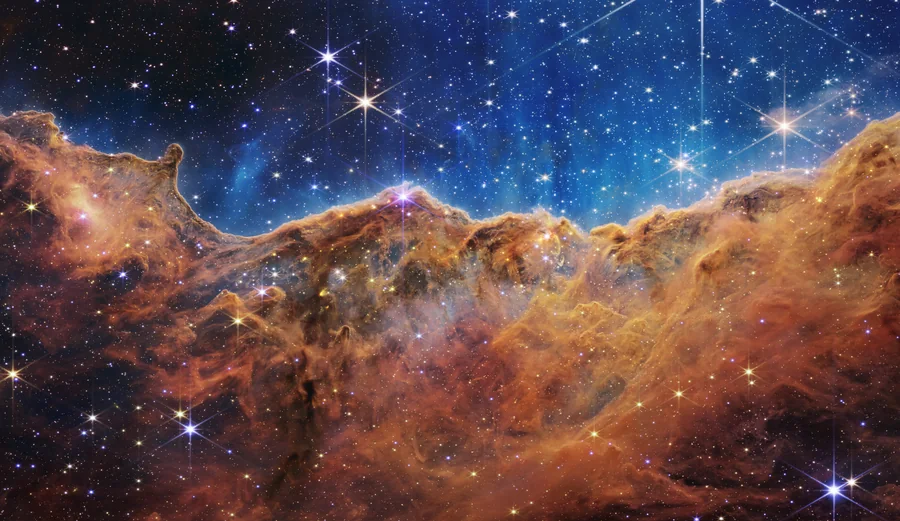
The debate over a distant planet illustrates three separate questions: is a feature real, which molecule caused it, and would biology be required?
 Research result
VLA and MeerKAT observations place limits on a defined class of radio transmissions, while leaving many possibilities untested.
Report explainerThe FY2024 report helps explain retrospective submissions, changing case status and the limits of missing sensor data.