A model tests one chemical-delivery pathway and finds Mars more favorable than Earth under its assumptions. The study did not detect organisms or establish that Martian life seeded Earth.
A new modeling study challenges the idea that comets reliably supplied early Earth with concentrated chemical ingredients for life. It does not show that life is impossible elsewhere, or establish which alternative pathway produced life here.
The Scientific Reports paper was published October 28, 2026. Lead author Richard Anslow had announced its acceptance on September 27; The Debrief reported on it October 29. Those are separate dates, not three independent discoveries.
What does the study test?
The researchers combine models of comet populations, atmospheric passage and impact chemistry. Their question is whether fragile organic material can reach a useful surface environment intact and sufficiently concentrated. They focus on hydrogen cyanide, a feedstock for prebiotic chemistry, rather than transporting living organisms.
In the paper’s Earth simulations, 54 percent of modeled bombardment histories produce no impact delivering the specified useful concentration to exposed land. That number describes outcomes under the model’s assumptions. It is not a 54 percent probability that Earth lacks life. The authors also identify dilution after delivery as an additional obstacle.
What does the Mars comparison show?
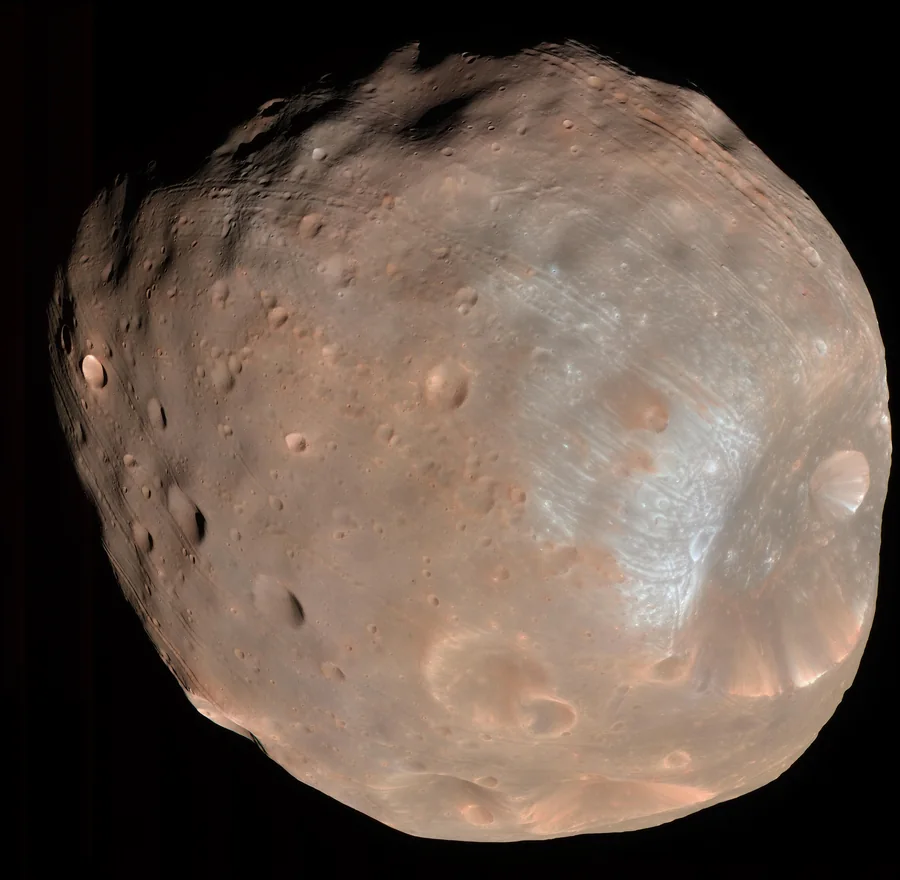
The authors’ full manuscript also compares modeled comet delivery to Mars, Earth and Venus. Ignoring whether useful dry land was available, the simulations average 744 ± 27 Martian impacts delivering more than 10 millimolar hydrogen cyanide, compared with 87 ± 9 for Earth. In a separate early-Mars case with a one-bar atmosphere, the modeled count falls to 448 ± 21 but remains more than five times the Earth comparison.
Those figures are model outputs and upper limits for environments where later prebiotic chemistry might occur. The paper explicitly says its comparison is agnostic about global conditions such as exposed land and surface water. It reports no Martian organism, biosignature or confirmed origin-of-life event.
NewsNation’s November 6 upload presents an interview in which Avi Loeb discusses a further possibility: comet-delivered ingredients could have supported early life on Mars, followed by rocks carrying microbes from Mars to Earth. Loeb’s published transcript presents that as possible, not known. This is a panspermia interpretation layered onto the modeled chemistry; the study does not establish that life began on Mars or reached Earth.
What should readers separate?
| Question | What would answer it? |
|---|---|
| Can a carrier contain organic molecules? | A composition measurement. |
| Can useful material survive delivery? | Transport and chemistry evidence under relevant conditions. |
| Did that process generate life? | A further explanation connecting ingredients to living systems. |
This distinction prevents a common leap: finding an ingredient is not equivalent to finding a recipe that worked. Conversely, weakening one delivery hypothesis does not identify the successful alternative. These are different research questions, and a compelling headline should not collapse them.
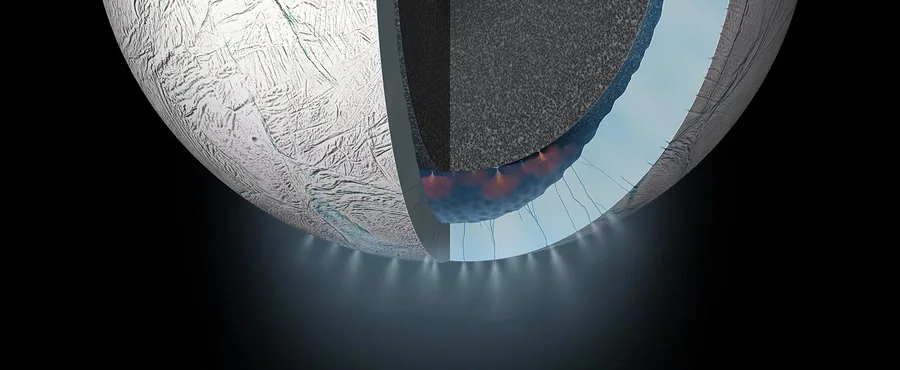
Our Enceladus model review and biosignature guide explain related boundaries between a plausible process and evidence of life. The comparison is methodological; those studies do not corroborate this comet model.
What did we review?
We read the author’s original announcement, The Debrief’s report, the full indexed primary manuscript, NewsNation’s official upload description and search-indexed text of Loeb’s interview transcript. Direct journal retrieval failed, the Medium page was blocked by security verification, and we did not retrieve or review NewsNation’s full recording or caption text. We did not inspect supplementary files or reproduce the simulations. Treat this as a bounded explanation of the published argument and a clearly labeled follow-up interpretation, not independent validation.
Follow the sources
- Anslow and colleagues: cometary delivery model Scientific Reports, October 28, 2026, DOI10.1038/s41598-026-74214-y. Search-indexed original abstract, results and discussion reviewed; direct journal page redirected to inaccessible identity endpoint. No numerical reproduction or supplementary review.
- Anslow and colleagues: full primary manuscript Primary manuscript posted November 2, 2026. Full indexed text reviewed, including the Earth, Mars and Venus comparison. It is the authors’ manuscript of the October 28 Scientific Reports study, not a later experiment.
- Richard J. Anslow: paper acceptance announcement September 27, 2026; original author page and abstract reviewed. Confirms earlier public discussion before the October journal publication.
- The Debrief: report on comet delivery Ryan Whalen, October 29, 2026; original report reviewed. Discovery source, not an independent reproduction of the model.
- NewsNation: Avi Loeb interview on the Mars comparison Official NewsNation upload, November 6, 2026 at 8:42 a.m. Pacific. Publisher description and page metadata reviewed. The full recording and caption text were not retrieved or reviewed.
- Avi Loeb: interview transcript and interpretation November 6, 2026. Search-indexed full transcript reviewed. Direct Medium access was blocked by security verification; Loeb’s Mars-to-Earth proposal is his interpretation, not a finding that life existed on Mars.
Each source note identifies the context and evidence it supports. Linked material establishes only the claims described in its source note. Official attribution and publication do not eliminate uncertainty. Read our editorial standard.
This is original, AI-assisted research and analysis compiled from the linked sources. It has not received independent expert review. We distinguish source findings from our interpretation and record substantive corrections. Corrections policy