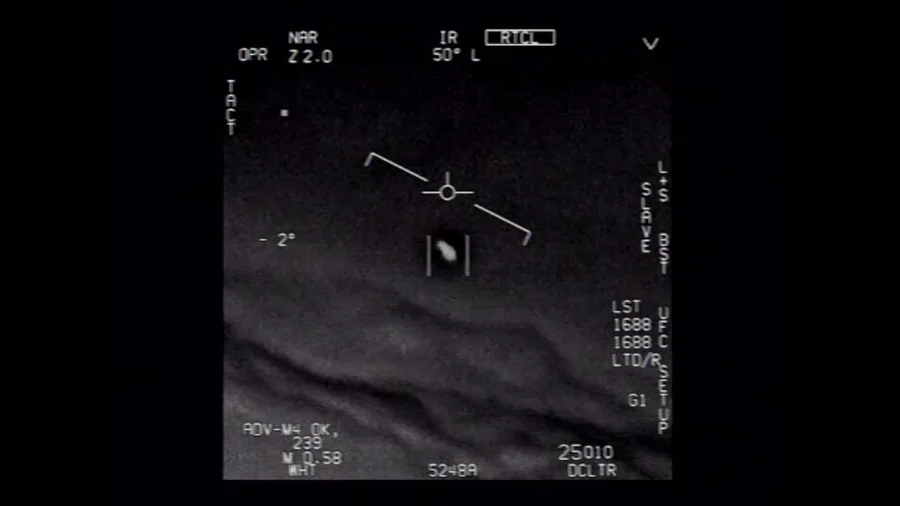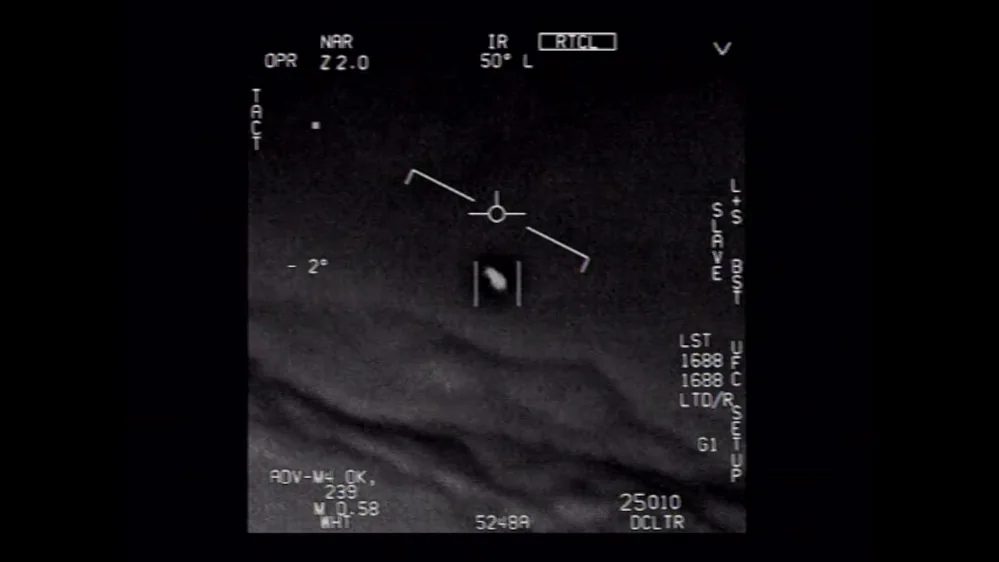
Official archives let readers examine the records behind UFO claims. A record’s government provenance does not, by itself, establish the explanation for an observation.
A headline about newly released UFO files leaves a practical question: where can you read the actual documents? This guide starts with the official collection and gives you a repeatable way to examine a release. It is a research guide, not an announcement that a new sighting or discovery happened today.
Start with the National Archives
The National Archives’ UFO and UAP research portal brings together records held across several collections. Its links cover photographs, recordings, textual records and presidential libraries. Older material can sit outside the newer dedicated UAP collection, so one collection search is not necessarily a search of everything NARA holds.
For records transferred into that dedicated collection, open Record Group 615. NARA says it adds material as agencies transfer it. The page links to agency series, their catalog descriptions and agency-provided metadata. Start from those descriptions rather than a cropped screenshot circulating on social media.
Which agencies appear in the collection?
The table follows the agency collections linked from NARA’s RG 615 directory. Each catalog identifier leads to a series of records, not a single sighting. The accompanying CSV is the agency-provided metadata list linked by NARA. Inclusion here does not mean an agency verified an extraordinary explanation.
| Agency | Catalog series | Metadata |
|---|---|---|
| Federal Aviation Administration (FAA) | 493468575 | Open CSV |
| Nuclear Regulatory Commission (NRC) | 488808322 | Open CSV |
| Office of the Director of National Intelligence (ODNI) | 493468579 | Open CSV |
| Office of the Secretary of Defense (OSD) | 493468580 | Open CSV |
| National Security Agency (NSA) | 580103959 | Open CSV |
| Department of State | 608806625 | Open CSV |
| Federal Bureau of Investigation (FBI) | 580705010 | Open CSV |
| Department of the Air Force | 656595571 | Open CSV |
| U.S. Customs and Border Protection (CBP) | 665701604 | Open CSV |
How to find a specific UFO record
- Start with the claim’s details. Note the agency, location, person, event date and any document identifier. These give you something more precise to search than “UFO.”
- Open the relevant catalog series. Read its scope before searching the linked records. Use the metadata list to look for matching names, dates or identifiers; the list helps locate a record, but does not replace reading it.
- Keep the individual record’s identity. Save its title, catalog link, identifier and original download when available. The series number in our table identifies the collection; preserve the separate item identifier too.
- Compare the record with the headline. Ask whether it contains firsthand observations, a relayed account, sensor data or an assessment. Record what is missing as carefully as what is present.
If the relevant agency or item is absent, return to the wider NARA UFO research portal. A search of these nine series is not an exhaustive search of every government UFO record. A failed keyword search also cannot establish that a document never existed.
Keep three dates separate
Our reading method records the event date, the document’s creation date and the date it became publicly available. These dates answer different questions. A file released recently can describe a much older observation. Calling it a new UFO incident would mislead readers even if the release itself is news.
Also distinguish the archive page’s review date from an individual file’s release date. NARA’s directory displayed September 21, 2026 when we checked its links on October 13. Those dates describe the directory and our check, respectively; they do not establish when a particular file was released. A refreshed directory is not evidence that every linked item was newly disclosed.
For example, a newly available report about an event decades ago would be a records-release story, not a new sighting. When the public release date cannot be established, say that it is unknown instead of substituting the date you found the file. This navigator is a collection guide, not a chronological feed of new releases.
Worked example: the 1952 Tremonton film posted in 2026
The official DVIDS entry for DOW-UAP-PR159 shows why dates and identifiers matter. Its description attributes the Utah filming to Navy officer Delbert C. Newhouse. We examined the entry and metadata, not the underlying film or its companion document.
| Field | What the official entry records |
|---|---|
| Filming date | July 2, 1952 |
| DVIDS posting date | September 18, 2026; not a new sighting date |
| Record identity | DOW-UAP-PR159; DVIDS video 1023402 |
| Companion document | DOW-UAP-D102, referenced by the entry |
AARO’s description says limited detail and absent fixed reference points prevented a conclusive resolution. It also flags unrelated sewing-equipment footage after 55 seconds and uncertainty about how the surviving material was combined. Those qualifications belong alongside any excerpt. The posting date identifies this digital entry; it does not establish when the historical film first became public.
Our practical takeaway: preserve the source’s caveats with its identifiers. A cropped clip can lose both context and the distinction between an old observation and a recent upload.
What about missing or redacted material?
NARA’s collection FAQ explains that transferred records are digital and that publicly releasable copies become available through the National Archives Catalog. Some digital copies may be available at the College Park research complex before appearing online. The FAQ also discusses transfers involving both redacted and unredacted copies.
For readers, the useful discipline is to identify exactly what is available. Note missing pages, unreadable text and redactions without inventing what they conceal. A gap can limit a conclusion; it cannot supply the missing evidence. Save the original file alongside its description when the archive provides a download.
Does an official UFO file prove alien life?
A document can establish that a report was received, an observation was recorded or an investigation took place. Assessing what caused the observation is a further step. In its UAP FAQ, NASA says it has not found credible evidence of extraterrestrial life and that evidence does not establish UAP as extraterrestrial. It also describes the limits caused by sparse, low-quality observations.
When reading a specific case, ask whether the document contains direct measurements, a witness’s account, an analyst’s inference, or a summary of somebody else’s report. Then ask what independent information could test the proposed explanation. This is the evidence standard we use when covering AARO’s annual report and the GoFast video analysis.
Follow the record into the wider story
For terminology, start with UFO, UAP and USO explained. For named witnesses, use our whistleblower and witness directory; for testimony, consult the congressional hearing guide. Our UFO and alien news desk links these source guides to individual reports and scientific studies.
Guide update — October 13, 2026: Added a worked Tremonton example with its 1952 filming date, 2026 DVIDS posting date, record identifiers and source qualifications. Earlier work added nine agency collection links and a record-finding checklist. This update does not announce a new government release or claim that every document in these collections has been reviewed.
Follow the sources
- National Archives: UFO and UAP records Official research portal for collections and record formats; checked October 13, 2026
- National Archives: Record Group 615 Agency collections, catalog links and metadata; page reviewed September 21, 2026; checked October 13, 2026
- National Archives: UAP collection FAQ Official explanation of transfers and public access; checked October 13, 2026
- DVIDS / AARO: Tremonton archival-film entry, DOW-UAP-PR159 Filmed July 2, 1952; entry posted September 18, 2026; description and metadata reviewed October 13 UTC, not the video or companion document
- NASA UAP frequently asked questions Official scientific evidence context; checked October 12, 2026
Source dates and context are listed below. Linked material establishes only the claims described in its source note. Official attribution and publication do not eliminate uncertainty. Read our editorial standard.
This is original, AI-assisted research and analysis compiled from the linked sources. It has not received independent expert review. We distinguish source findings from our interpretation and record substantive corrections. Corrections policy