A new thermal model makes buried water ice an unlikely explanation for the measured acceleration. It does not prove that 1998 KY26 is a spacecraft, while spectral evidence supports an asteroid origin.
A peer reviewed thermal study challenges one proposed explanation for the unusual motion of asteroid 1998 KY26. It does not establish that the object is the lost Soviet spacecraft Phobos 1.
The Icarus study models whether water ice could remain inside the small near Earth object and drive its measured nongravitational acceleration through outgassing. A November 12 Fox News report brought the result and a competing spacecraft hypothesis into the same public discussion.
What does the thermal study find?
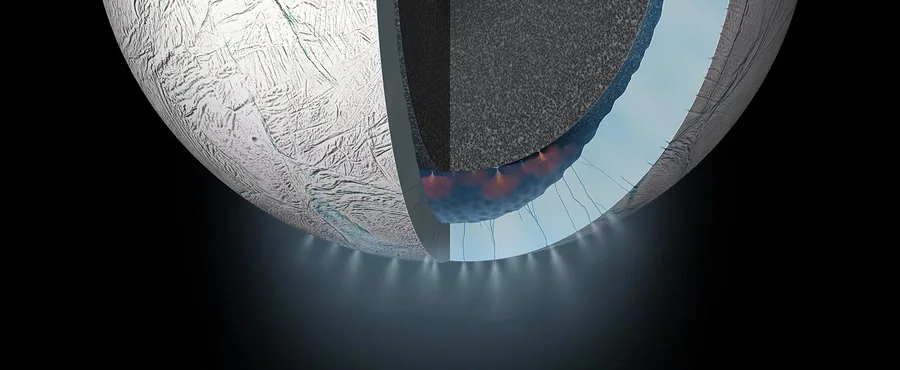
Korbin Hansen and Masatoshi Hirabayashi tested 13 thermal characterizations that vary the object’s size, conductivity, reflectivity, heat capacity and spin direction. Their orbit averaged temperatures remain above the sublimation point of buried volatiles in vacuum. Under those modeled conditions, water would escape too quickly to persist as the reservoir needed for long term outgassing.
This narrows an explanation. It does not measure the interior directly, identify the force that moves the object or turn every alternative into an equally likely answer. The result should be read as a thermophysical constraint on a water driven dark comet model.
What has actually been measured?
A 2025 physical characterization reports an effective diameter of 11 plus or minus 2 meters and a rotation period of about 5.35 minutes. The researchers combined optical light curves, radar data and a phase curve. Those measurements describe a very small, rapidly rotating body.
A separate 2026 spectroscopic study classifies the object as an X or Xe type with a high albedo consistent with an E type asteroid. Its authors favor an origin in the inner main belt, probably associated with the Nysa family. Composition evidence of this kind does not explain every part of the orbit, but it is independent evidence for a natural asteroid interpretation.
Why has Phobos 1 been proposed?
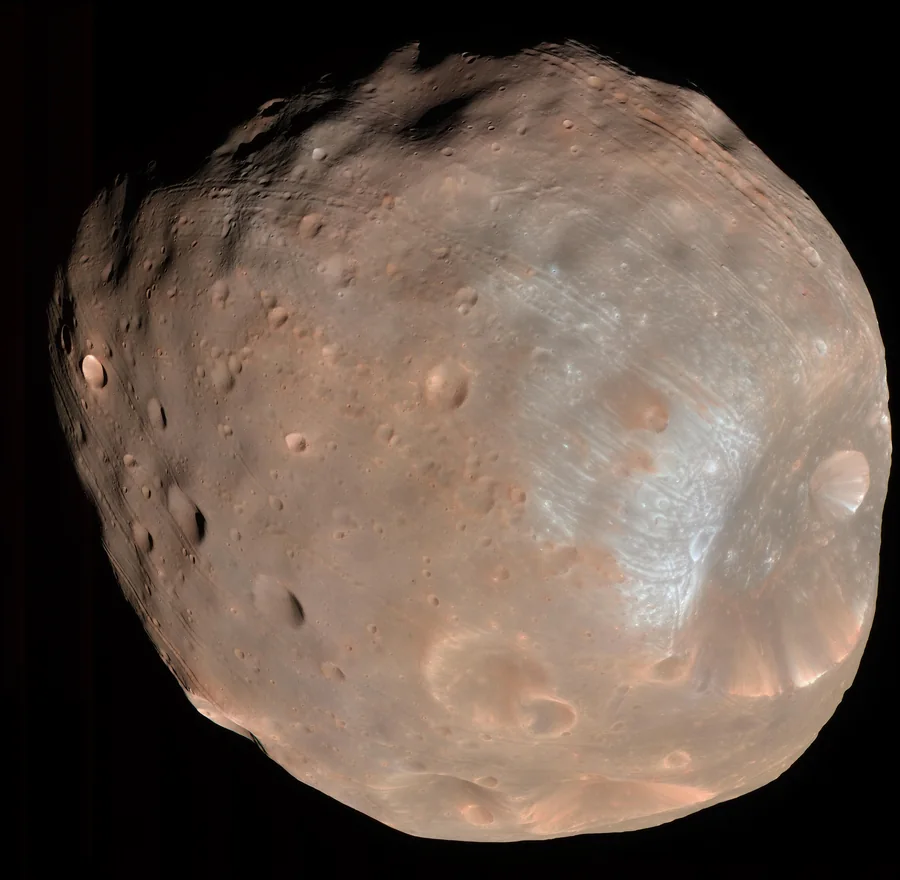
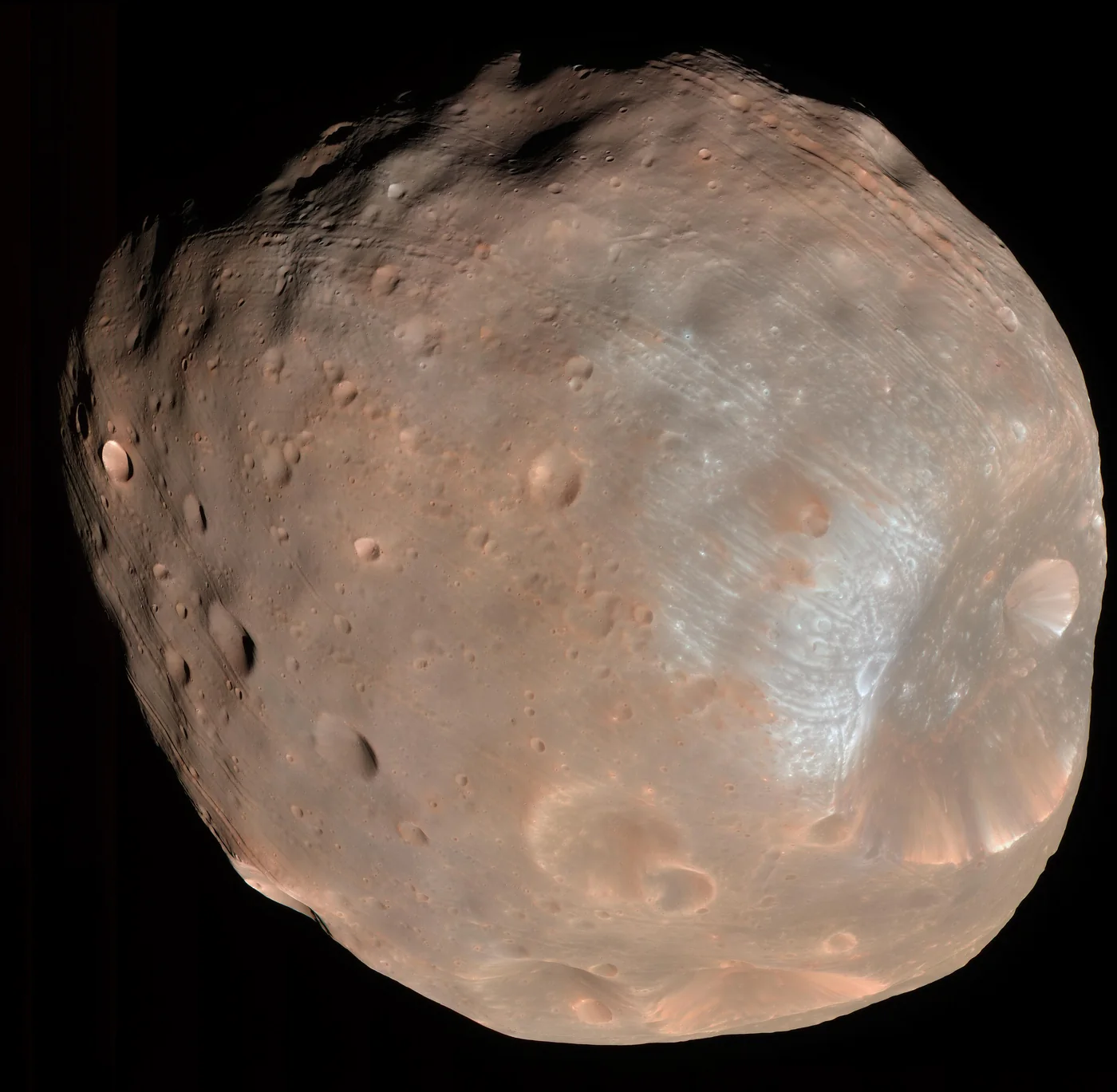
Phobos 1 was a Soviet Mars mission lost in 1988 after a faulty command shut down the spacecraft. In a September preprint, Adam Hibberd, Adam Crowl and Abraham Loeb compare a simplified Phobos 1 shape with eight light curves of 1998 KY26. Against 260 astrometric and radar measurements, their cylinder and solar panel models reduce residuals by about 11 percent relative to a gravity only model. The panel version is about 0.36 percent worse than a standard solar radiation pressure fit, so that improvement is not unique evidence for a spacecraft shape.
The authors describe the hypothesis as unproven. Shape agreement from a simplified model is not an image, serial number or tracked orbital chain linking the object to the spacecraft. The spectral asteroid result also provides a concrete competing interpretation.
What could settle the question?
NASA’s Hayabusa2 mission page confirms that the spacecraft is traveling toward 1998 KY26 as part of its extended mission. A planned 2031 rendezvous should allow direct imaging and measurements that remote observations cannot provide.
In the Fox interview, NASA Administrator Jared Isaacman said he had seen no evidence that the object is anything other than an asteroid and no indication that it threatens Earth. We did not locate a separate NASA transcript, so that statement remains attributed to the publisher’s recording and report.
Review scope: We checked the journal record and accessible manuscript for the thermal model, the published physical and spectral studies, the Phobos 1 preprint, NASA mission pages and the November 12 publisher report. We did not reproduce the calculations or inspect raw telescope and radar files. The 2031 encounter remains future work, not a completed identification.
Follow the sources
- Hansen and Hirabayashi: thermal model of 1998 KY26 Available online October 28, 2026 and assigned to Icarus 463 (2027), article 117361. Abstract and indexed record reviewed November 12, 2026. The model tests whether buried water ice can persist; it does not identify the source of the measured acceleration.
- Hansen and Hirabayashi: author manuscript Submitted November 6, 2026. Accessible manuscript record corresponding to the Icarus article.
- Santana-Ros and colleagues: physical characterization of 1998 KY26 Nature Communications, 2025. Optical, radar and phase curve analysis reports a diameter of 11 plus or minus 2 meters and a rotation period of about 5.35 minutes.
- Tatsumi, de León and Popescu: spectrum and likely origin Astronomy and Astrophysics 709, A105, 2026. The measured spectrum and albedo support an E type asteroid interpretation and an inner main belt origin.
- Hibberd, Crowl and Loeb: Phobos 1 feasibility study Preprint submitted September 21, 2026. The authors compare a simplified spacecraft model with light curves and astrometry. They call the result unproven; it is not a direct observation of Phobos 1.
- NASA Science: Hayabusa2 mission NASA mission page confirming that Hayabusa2 is on an extended mission to asteroid 1998 KY26.
- NASA Goddard: Phobos program Historical mission page. Phobos 1 was lost after a faulty command caused the spacecraft to shut down while traveling to Mars.
- Fox News: 1998 KY26 report and NASA administrator interview Published November 12, 2026. Discovery source for the current public statement. The quoted interview is attributed to NASA Administrator Jared Isaacman; no separate NASA transcript was located in this review.
Each source note identifies the context and evidence it supports. Linked material establishes only the claims described in its source note. Official attribution and publication do not eliminate uncertainty. Read our editorial standard.
This is original, AI-assisted research and analysis compiled from the linked sources. It has not received independent expert review. We distinguish source findings from our interpretation and record substantive corrections. Corrections policy