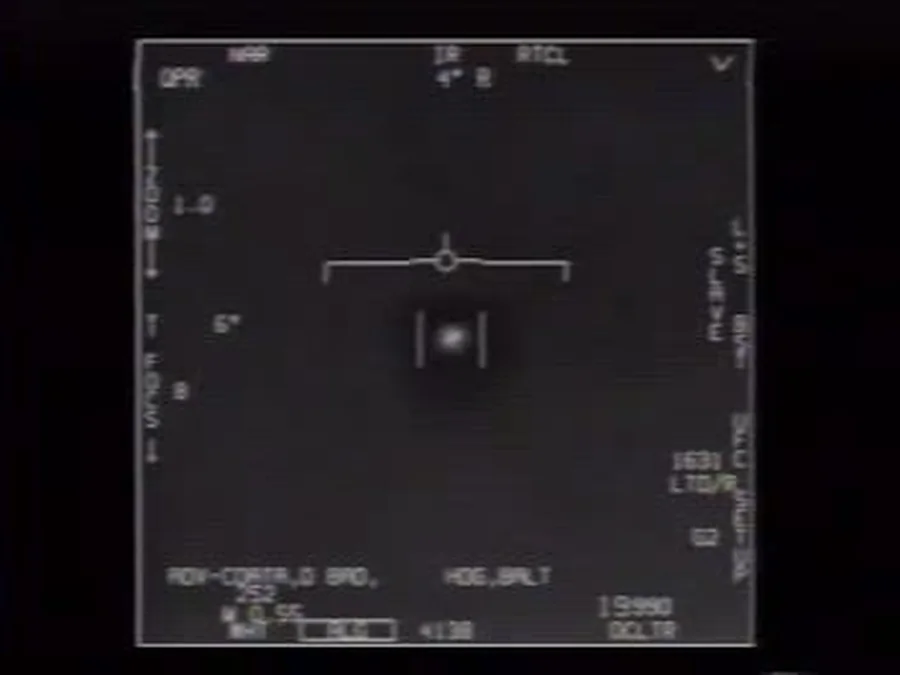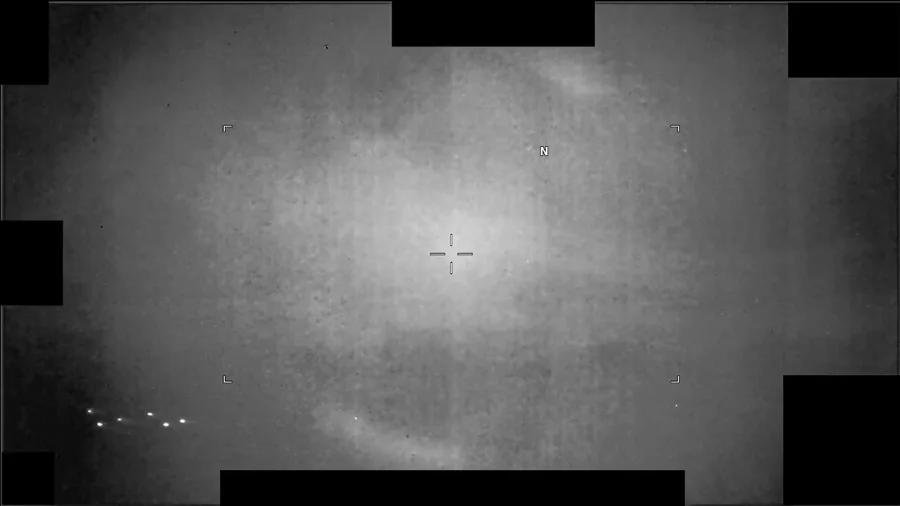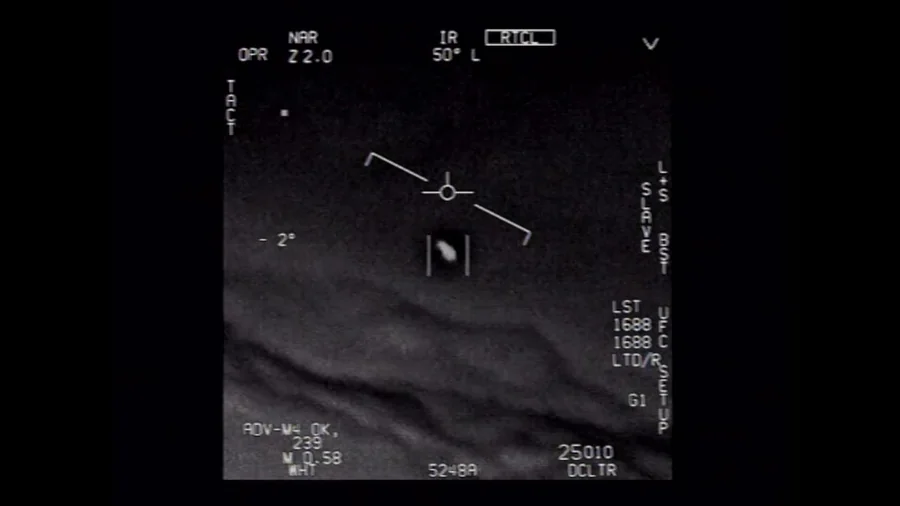
A fast crossing of a video frame is not, by itself, a measured high-speed object. Missing data leave competing explanations open.
Ravi Kopparapu’s October 29 Safe Aerospace Podcast interview explains why dramatic motion in a released UAP video need not establish extraordinary speed. The useful question is which measurements connect movement on a screen to movement through space.
The new interview revisits an earlier preprint by Jacob Haqq-Misra and Kopparapu, submitted August 12 and revised August 28. Its 112-video sample is the study’s corpus, not a new October release or a live count of the PURSUE catalog. The interview is discussion of research, not a new NASA determination.
What does the interview add?
In the reviewed segment, roughly 46 to 60 minutes, Kopparapu and host Ryan Graves discuss PR113. Graves offers a pilot’s impression of the scene and possible geometry, while repeatedly acknowledging uncertainty. Kopparapu returns to the absent information needed for a quantitative result. A plausible visual estimate and a constrained measurement are different kinds of evidence.
That exchange is useful because it makes the uncertainty concrete: an observer can recognize a familiar-looking flight situation without knowing the camera platform, target distance or full encounter geometry. The discussion does not settle the object’s identity.
What is missing from a speed claim?
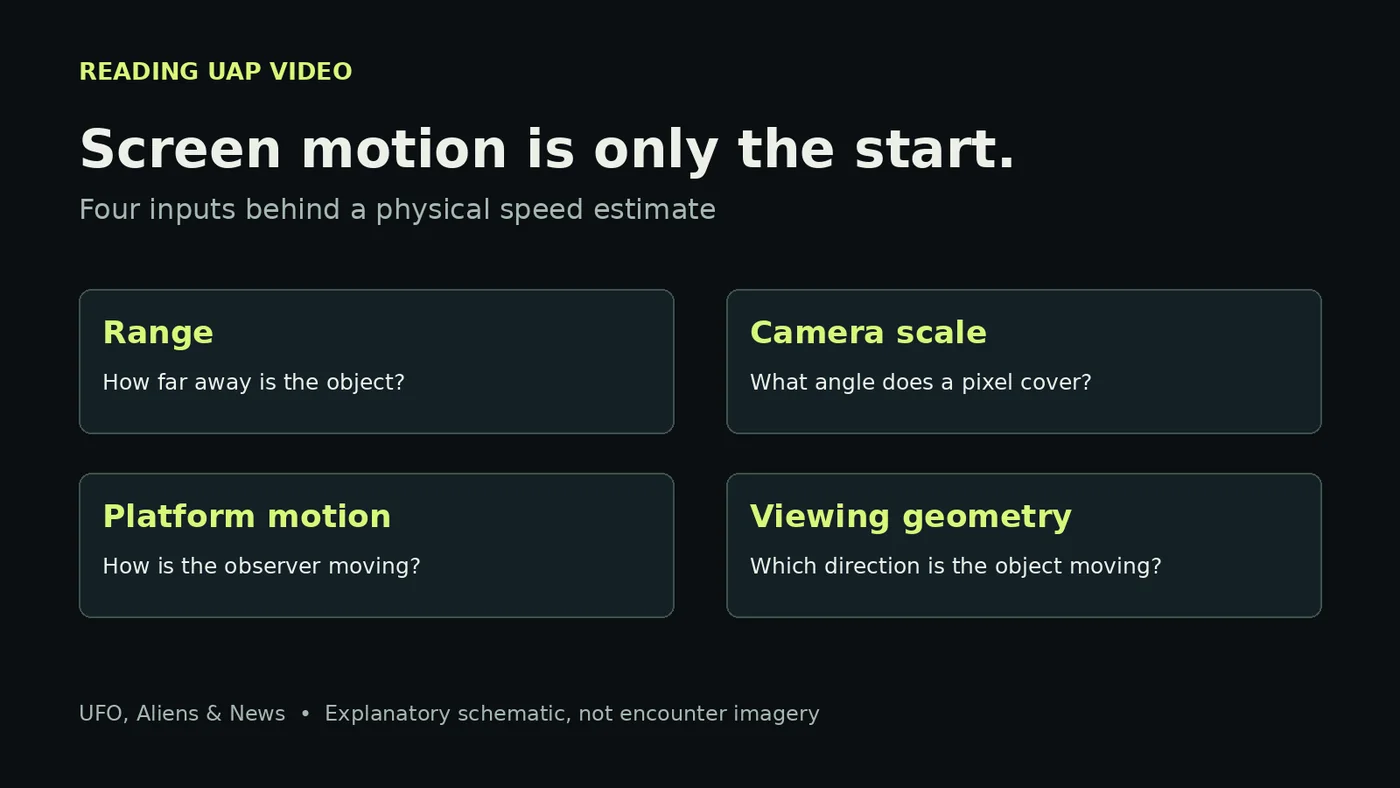
The paper examines how image motion becomes a physical velocity. Camera scale, distance, viewing geometry and the observing aircraft’s own motion matter. A tracking camera can also keep a moving object near the center of its frame; little screen motion does not mean little physical motion.
For PR113, the authors use visible angular markings to estimate camera scale, with explicit assumptions about what those markings mean. Unknown distance and geometry still permit markedly different interpretations. Neither a nearby bird nor a much larger, distant object becomes an identification merely because it fits one set of assumptions.
What would make the analysis stronger?
Useful supporting records would include aircraft flight data, sensor settings and range information or an associated radar track. Their availability cannot be assumed. Missing public inputs do not prove extraordinary performance, and they do not justify declaring every unresolved case explained.
Our GoFast guide and separate PR135 bird-analysis review show why different cases require their own evidence. The PURSUE tracker keeps release records distinct from interpretations.
What did we review?
We reviewed the original episode’s description and the cited caption segment, plus the preprint’s methods and case discussion. We did not review the entire interview or independently reproduce the calculations. The manuscript is listed as submitted to a journal; peer-review acceptance was not verified.
Follow the sources
- Safe Aerospace Podcast: Ravi Kopparapu interview Original upload dated October 29, 2026. Description, chapters and original-page captions from 46:06 to 59:58 reviewed, covering PR113 and missing measurement inputs. Recording date not established; the full 82-minute episode was not reviewed.
- Jacob Haqq-Misra and Ravi Kopparapu: PURSUE kinematic analysis Preprint submitted August 12, 2026; v2 revised August 28. Abstract, methods, corpus assessment and PR113 discussion reviewed in the original HTML. Listed as submitted to Journal of Aerospace Information Systems; acceptance and peer review not verified. No independent numerical reproduction.
Each source note identifies the context and evidence it supports. Linked material establishes only the claims described in its source note. Official attribution and publication do not eliminate uncertainty. Read our editorial standard.
This is original, AI-assisted research and analysis compiled from the linked sources. It has not received independent expert review. We distinguish source findings from our interpretation and record substantive corrections. Corrections policy