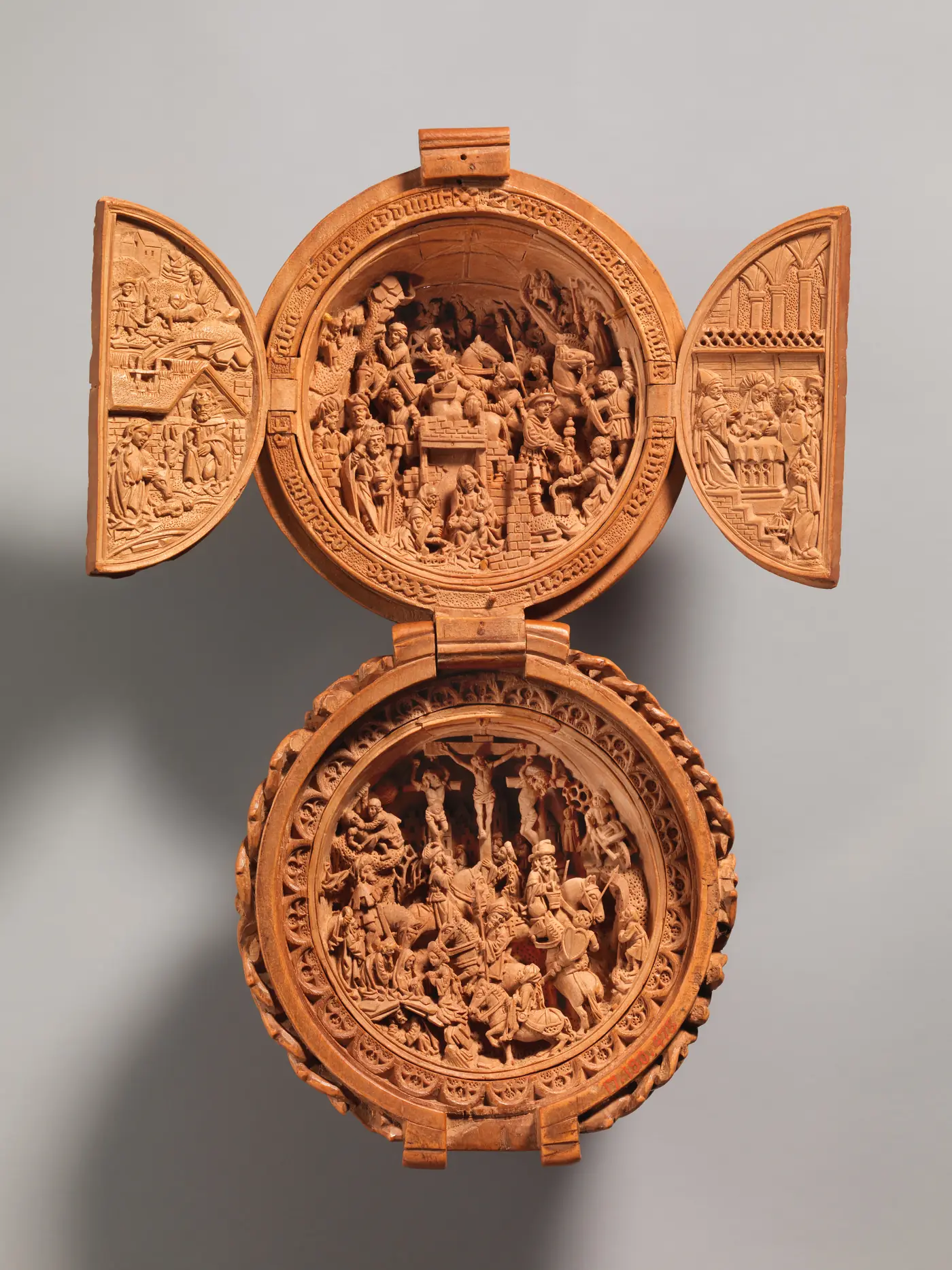
The miniature demonstrates extraordinary craft. Technical study supports layered construction and assembly, while particular workshop identities and the complete original toolkit remain uncertain.
This boxwood prayer bead is an early sixteenth century Netherlandish object, not an ancient artifact. Its tiny carved scenes can seem impossible to reach with a tool. Technical examination changes that question by showing how miniature elements could be worked separately and assembled.
How small is the surviving object?
The Met catalog identifies accession 17.190.475 as a prayer bead with the Adoration of the Magi and the Crucifixion. Closed, it measures 5.8 by 5.5 by 5.6 cm. Opened, its height reaches 11.2 cm. The 1917 gift date belongs to its collection history.
The hinged form combines a protective exterior with detailed Christian imagery inside. The museum's displayed audio transcript explains the devotional setting of prayer beads and their handling during prayer. The object was therefore more than a technical exercise or a display of smallness.
Was everything carved inside one block?
In their technical essay on boxwood miniatures, Lisa Ellis and Pete Dandridge describe examination using micro computed tomography. Their account identifies layered construction, separately carved elements and miniature joining methods. It also discusses this Met bead within the studied material.
Assembly changes the practical problem. A detail that is difficult to reach in the finished object may have been accessible from several sides before installation. Asking how a tool entered the final cavity can therefore assume an order of work that the construction evidence does not support.
What is known about the tools?
The researchers connect the work with woodcarving techniques at a reduced scale, while noting that an original miniature toolkit from this period does not survive. A later surviving toolkit is comparative evidence, not a direct inventory of what this maker used. The museum considers magnification probable, rather than identifying a particular lens recovered with the bead.
These limits should stay visible. Tool marks and assembly can support a manufacturing account even when the artist's name is unknown. Conversely, an impressive modern demonstration would not prove that every historical workshop followed the same sequence.
Does extraordinary detail demand an extraordinary origin?
Theory: the bead's interior required an unexplained technology because conventional tools could not reach it. That proposal must account for the evidence of separate working and assembly. Treating the completed miniature as a single unbroken carving overlooks the very construction history that makes it understandable.
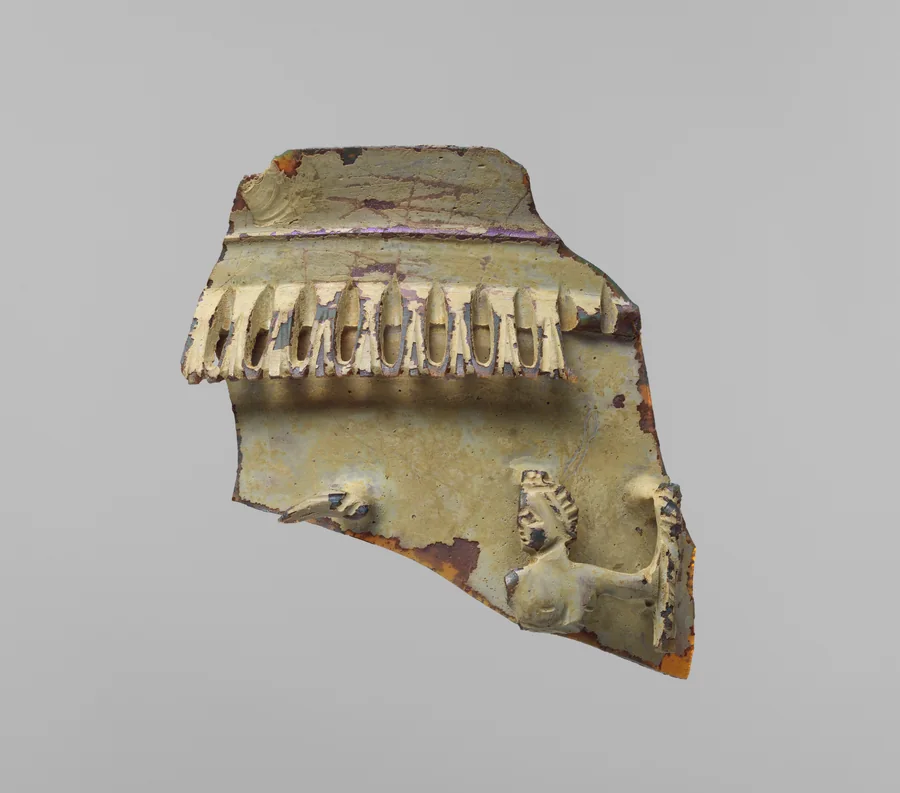
The strongest story is documented skill, planning and devotional purpose. Uncertain workshop attribution is not evidence of extraterrestrial assistance. Compare the Roman stone plate for a different material in which manufacturing traces help distinguish impressive workmanship from a speculative claim about hidden technology.
Follow the sources
- The Metropolitan Museum of Art: prayer bead 17.190.475 Undated catalog, public object record and complete displayed audio transcript checked November 15, 2026. Early sixteenth century date, Netherlandish attribution, dimensions and devotional imagery verified. Photograph marked Public Domain.
- Lisa Ellis and Pete Dandridge: Fabricating Sixteenth Century Netherlandish Boxwood Miniatures The Metropolitan Museum of Art, April 1, 2017. Original technical essay reviewed for imaging, layered construction, tool evidence and its stated limits.
- The Metropolitan Museum of Art: image resources Open Access policy and individual Public Domain object labels checked November 15, 2026. Saved API records for all seven objects additionally report isPublicDomain as true.
Each source note identifies the context and evidence it supports. Linked material establishes only the claims described in its source note. Official attribution and publication do not eliminate uncertainty. Read our editorial standard.
This is original, AI assisted research and analysis compiled from the linked sources. It has not received independent expert review. We distinguish source findings from our interpretation and record substantive corrections. Corrections policy