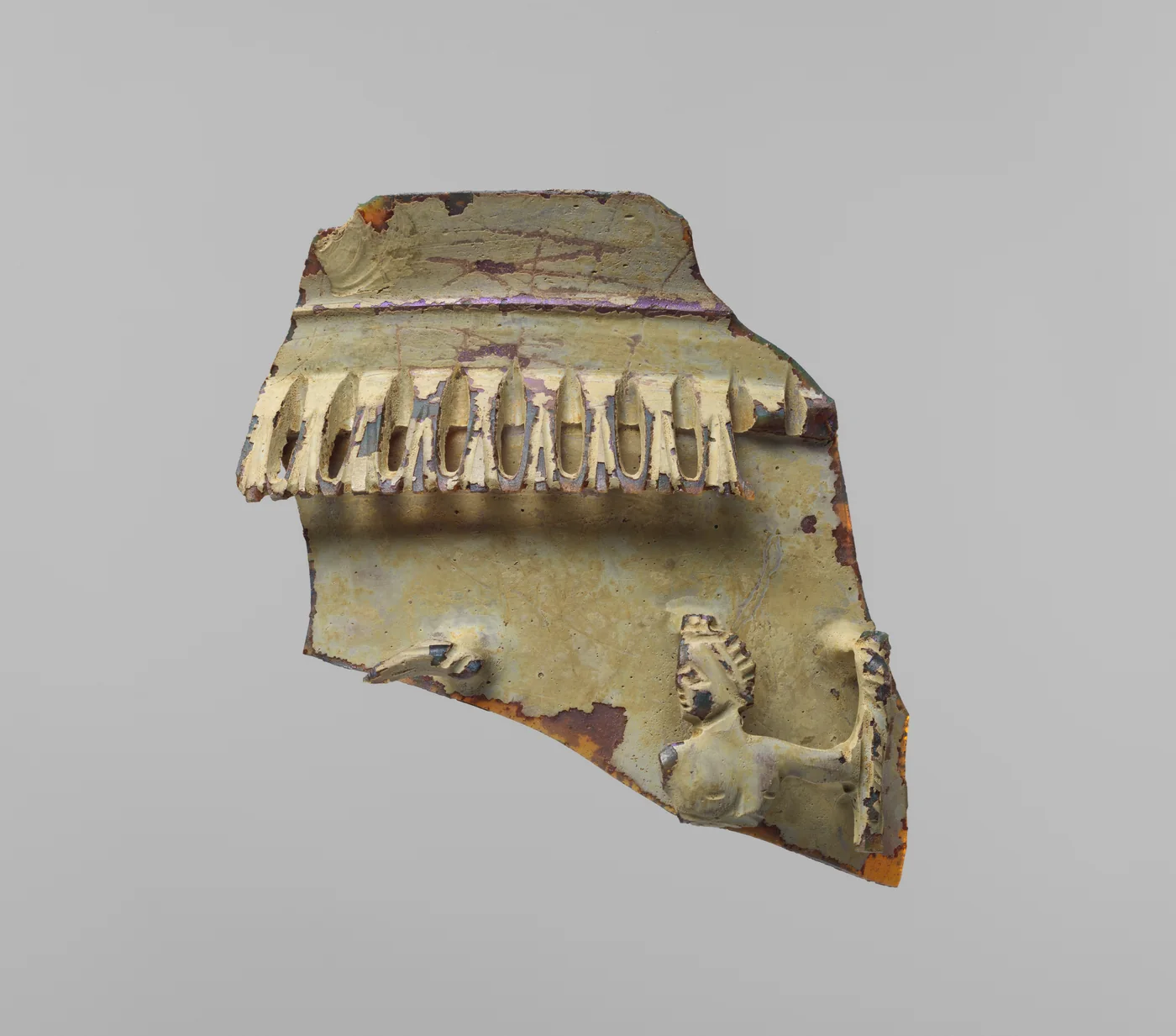
The material has a documented optical effect. That effect does not by itself establish a modern manufacturing recipe, a complete vessel design or extraterrestrial involvement.
This Roman glass fragment has a documented color effect: its appearance changes according to how light reaches the viewer. The object is genuine, but it is incomplete. A careful account must separate the surviving fragment, the reconstructed vessel and the explanation of its material.
What actually survives?
The Met catalog dates accession 26.60.95 to the late third or fourth century CE. The surviving piece measures 5.6 by 7.6 cm. It carries raised figural decoration, tentatively identified as part of a satyr or possibly Dionysos. The museum estimates an original rim diameter of about 18 cm.
That estimate concerns the larger vessel, not the width of the fragment in our photograph. The catalog describes glass that was blown or cast and then cut. Its alternative wording matters: the entry does not resolve every manufacturing step.
Why can its color change?
The museum describes an olive green appearance in reflected light and reddish amber in transmitted light, connecting the behavior to minute gold and silver particles in the glass. This is a material property, not evidence that a photograph must have been digitally recolored.
The lighting arrangement is essential to evaluating such a claim. Light returning from an object's surface and light passing through it take different paths. A comparison that changes the background, exposure and illumination simultaneously would be harder to interpret than one that records those conditions clearly.
Does the effect prove advanced modern technology?
Theory: this optical behavior required a modern industrial process. The existence of an effect does not identify the full sequence used to obtain it. To test that theory, researchers would need evidence about composition, particle characteristics and production conditions, together with comparisons to experimental glassmaking.
The catalog summary is not a laboratory recipe. It gives no manufacturing tolerances or basis for claiming that the maker controlled particles with modern measuring instruments. Conversely, the absence of a surviving recipe should not be turned into a claim that the effect was accidental. Those are separate propositions requiring their own evidence.
How can images mislead?
A photograph of a complete famous vessel cannot stand in for this accession. Our image is of the Met fragment, and a single museum view does not constitute a controlled demonstration of its color change. The distinction protects both the genuine optical result and the uncertainty about the missing vessel.
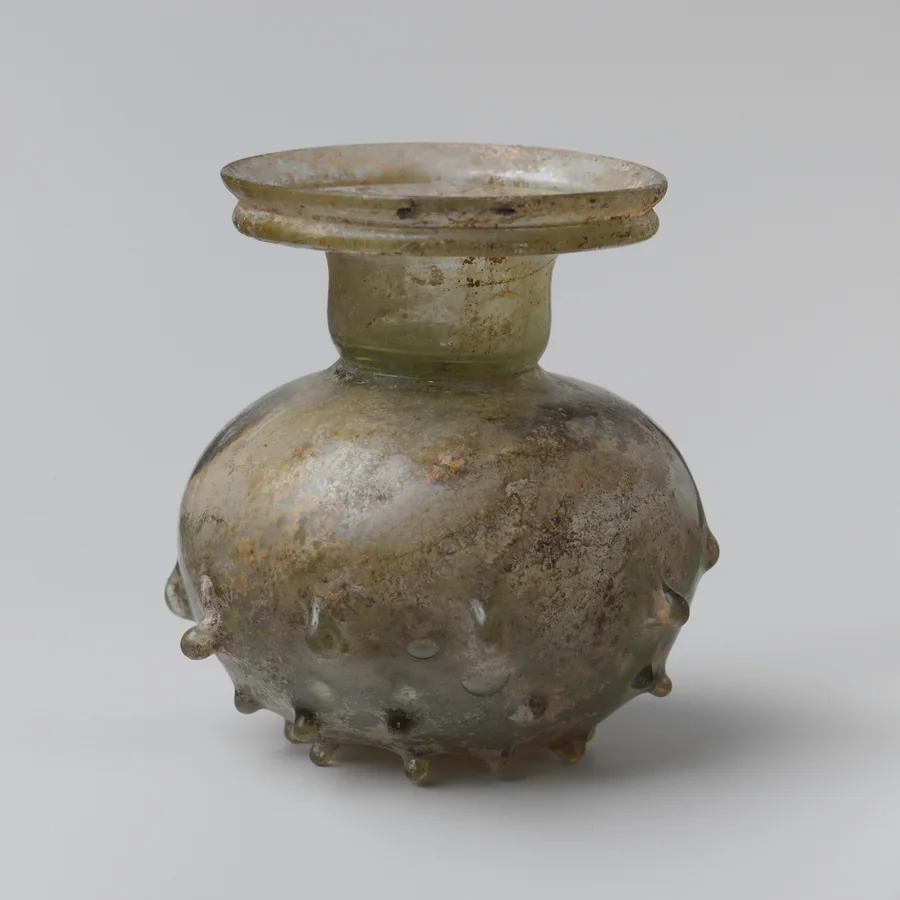
Compare the Roman sprinkler flask for a different use of glassworking skill: a restricted opening rather than an optical effect. Similar material does not mean identical technique or purpose, and neither object's craftsmanship supplies evidence of extraterrestrial manufacture.
Follow the sources
- The Metropolitan Museum of Art: glass cage cup fragment 26.60.95 Undated catalog and public object record checked November 15, 2026. Surviving dimensions, estimated vessel diameter, color behavior and qualified figure identification verified. Photograph marked Public Domain.
- The Metropolitan Museum of Art: image resources Open Access policy and individual Public Domain object labels checked November 15, 2026. Saved API records for all seven objects additionally report isPublicDomain as true.
Each source note identifies the context and evidence it supports. Linked material establishes only the claims described in its source note. Official attribution and publication do not eliminate uncertainty. Read our editorial standard.
This is original, AI assisted research and analysis compiled from the linked sources. It has not received independent expert review. We distinguish source findings from our interpretation and record substantive corrections. Corrections policy