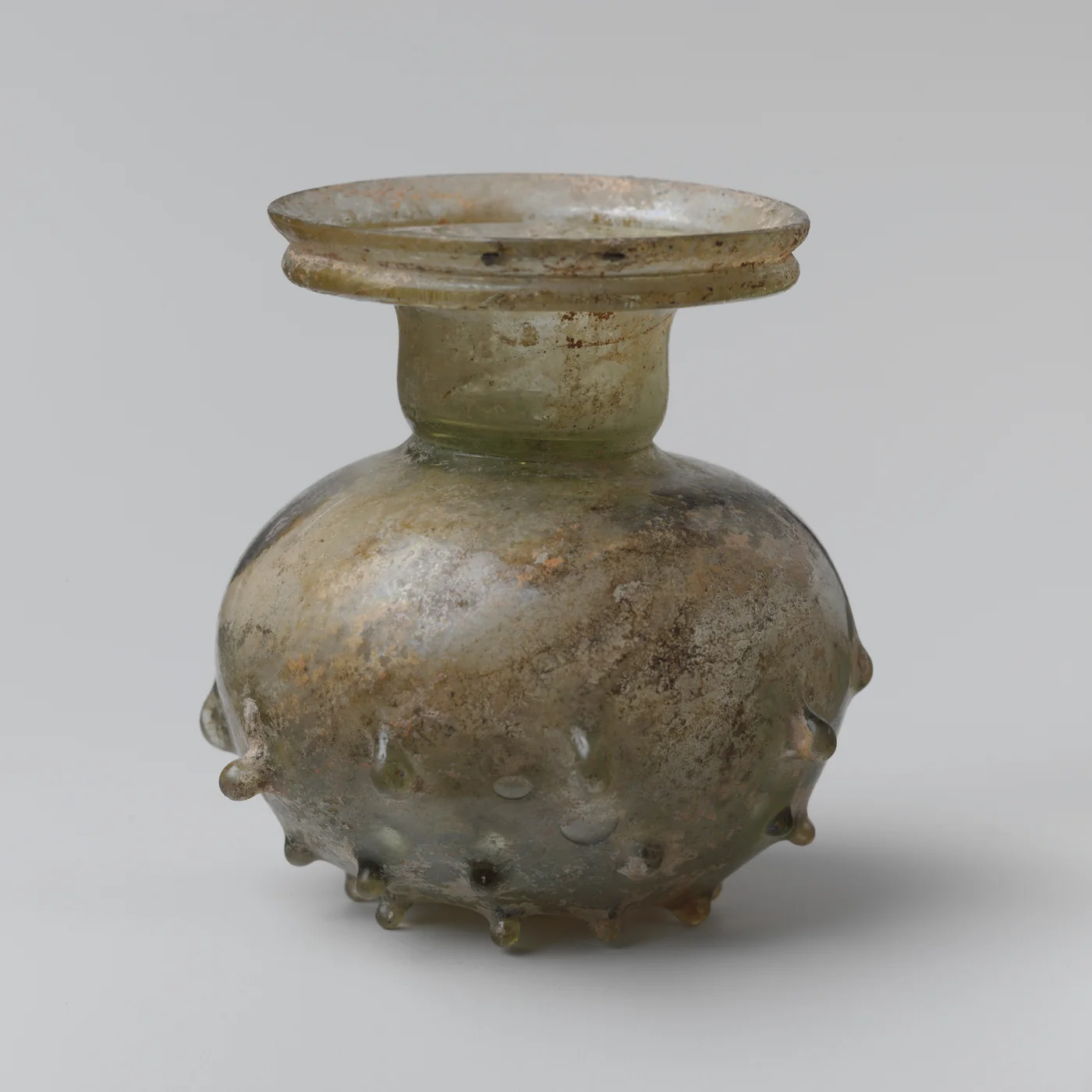
The neck diaphragm supports a controlled dispensing function. It is not evidence of a pressurized spray mechanism, and the original contents of this particular flask are not established here.
A Roman sprinkler flask does not require a hidden pump to explain its name. A narrow opening inside the neck limits how liquid can leave. The Met object and two Getty comparisons show how that simple feature appears in vessels with different decoration and proportions.
What is inside the Met flask?
The collection record identifies X.21.172 as a Roman flask from the eastern Mediterranean, dated to the third or fourth century CE. It is 7.9 cm high, made from pale green glass and decorated with raised knobs. A diaphragm with a small central hole sits at the base of the neck.
The museum describes the glass as blown and tooled. Its credit line does not provide an acquisition year, so the accession number should not be converted into one. The original liquid contents are also not established by the record reviewed here.
How do the Getty examples compare?
Getty catalog 202 explains the restricting diaphragm and its connection with dispensing individual drops. Catalog 223 documents the same general feature in a taller vessel. These are comparison objects, not additional views of the Met flask.
| Object | Catalog date | Height | Distinguishing feature |
|---|---|---|---|
| Met X.21.172 | Third to fourth century CE | 7.9 cm | Rows of raised knobs |
| Getty 202, accession 2003.336 | Third to fourth century CE | 8.3 cm | Molded decoration and a restricted neck |
| Getty 223, accession 71.AF.81 | Later fourth to early fifth century CE | 13.5 cm | Curved ribs around the body |
What does the diaphragm explain?
The feature offers a physical connection between shape and proposed use. Unlike a visual resemblance to an unrelated modern device, the small passage is directly relevant to liquid leaving the container. The comparison strengthens an interpretation of controlled dispensing without requiring the three objects to share one workshop or owner.
Theory: the flask functioned as a modern pressure sprayer. That would require evidence for additional components and a pressure source. A restricted opening alone does not establish either. The word sprinkler should not silently introduce a pump, nozzle assembly or measured spray pattern absent from these records.
What remains unmeasured?
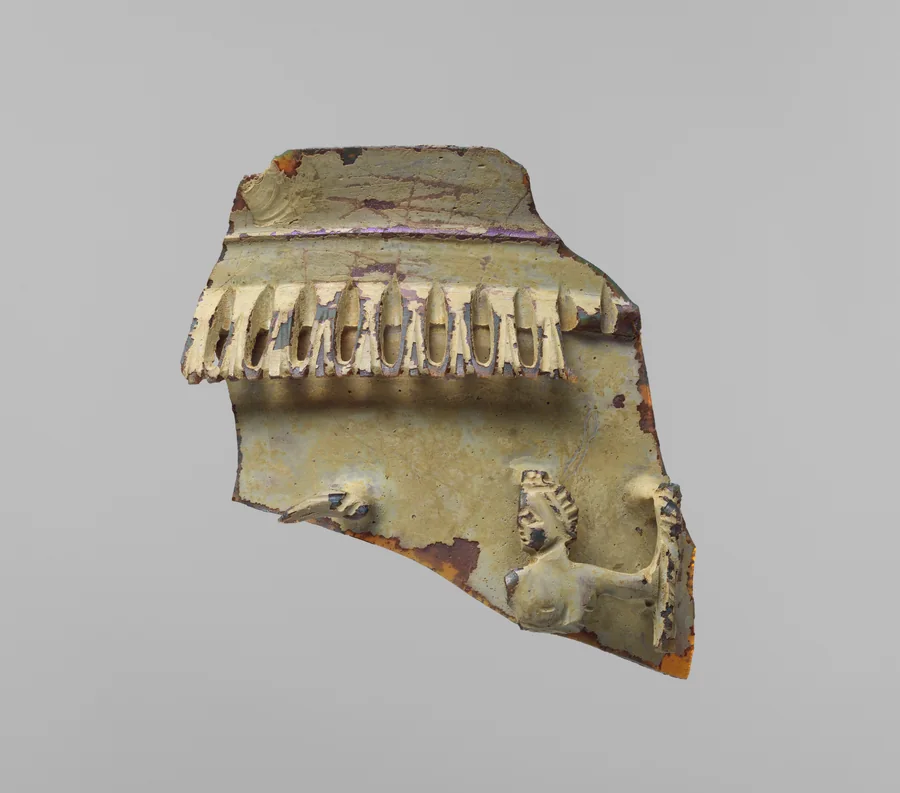
Neither the small hole nor a replica's performance supplies the ancient liquid's identity. Drop size and flow would depend on the opening, orientation and fluid properties. We have no measured operating result for this flask. The supported conclusion is a thoughtfully shaped dispensing vessel, with the exact contents and individual history still unknown. The dichroic glass fragment illustrates a separate technical achievement in the same broad material tradition.
Follow the sources
- The Metropolitan Museum of Art: glass sprinkler flask X.21.172 Undated catalog and public object record checked November 15, 2026. Height, date range, material and internal diaphragm verified. Acquisition year is not stated. Photograph marked Public Domain.
- J. Paul Getty Museum: Ancient Glass, catalog 202 Anastassios Antonaras, Ancient Glass, 2025. Complete catalog entry reviewed November 15, 2026, including manufacture, dimensions and explanation of the restricting diaphragm. No Getty photograph reproduced.
- J. Paul Getty Museum: Ancient Glass, catalog 223 Anastassios Antonaras, Ancient Glass, 2025. Complete catalog entry reviewed November 15, 2026. This taller ribbed flask is a separate comparison object, not the Met flask. No Getty photograph reproduced.
- The Metropolitan Museum of Art: image resources Open Access policy and individual Public Domain object labels checked November 15, 2026. Saved API records for all seven objects additionally report isPublicDomain as true.
Each source note identifies the context and evidence it supports. Linked material establishes only the claims described in its source note. Official attribution and publication do not eliminate uncertainty. Read our editorial standard.
This is original, AI assisted research and analysis compiled from the linked sources. It has not received independent expert review. We distinguish source findings from our interpretation and record substantive corrections. Corrections policy