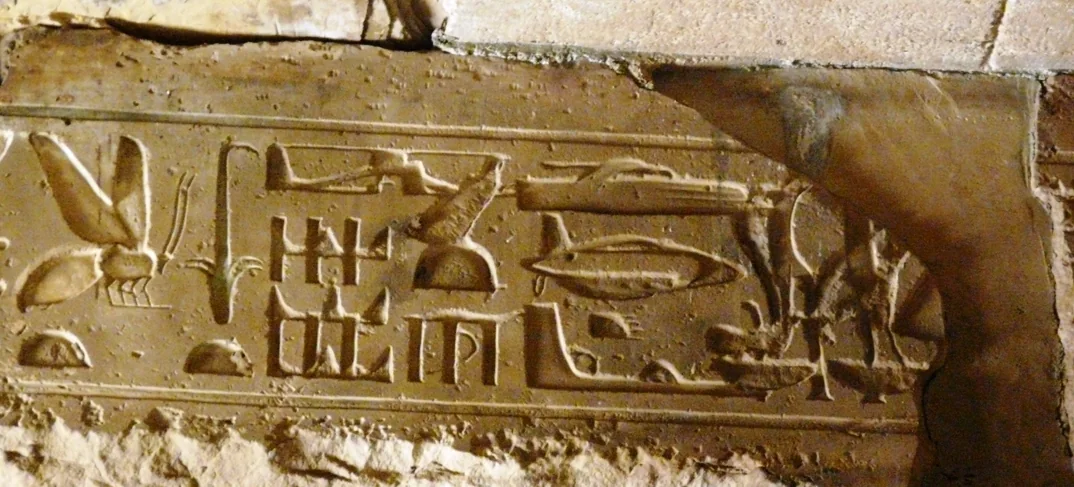
The reading of overlapping royal inscriptions explains the apparent aircraft shape. The temple relief is not evidence of an ancient helicopter.
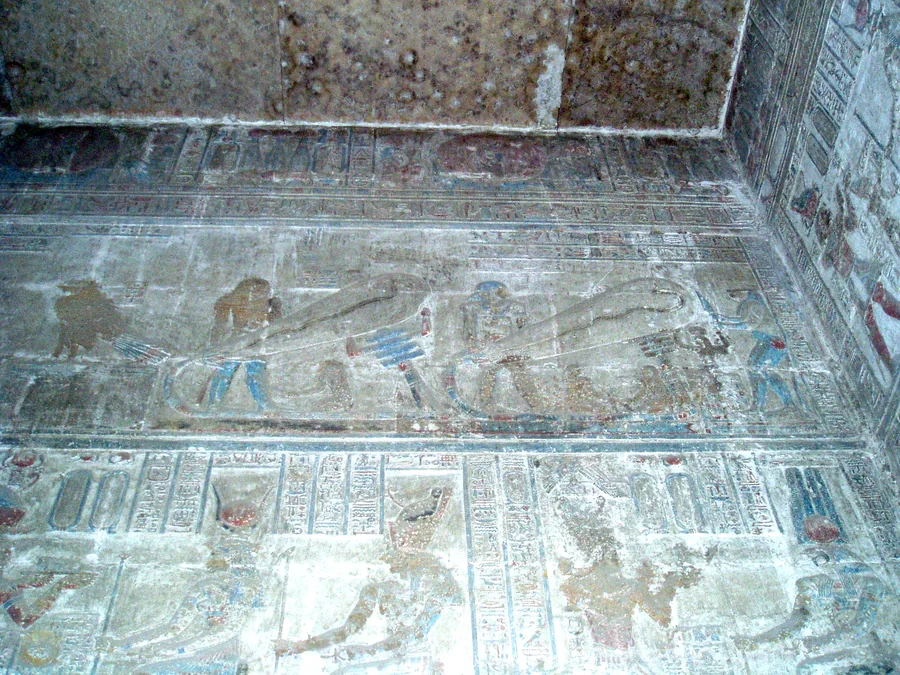
A shape above the columns in the Temple of Seti I at Abydos resembles a helicopter. Nearby forms have also been compared with modern vehicles. The photograph is of an ancient inscription, but recognizing a familiar outline is only the first step. Its history can be tested against the rest of the writing.
Two kings, one decorated surface
The Egyptian Ministry's chronology places Seti I's reign at approximately 1294 to 1279 BCE and Ramesses II's at approximately 1279 to 1213 BCE. These dates provide context for the kings, rather than an exact date for carving the disputed shape. The inscription is roughly 3300 years old.
Joshua Aaron Roberson's 2016 study in Kmt locates it on an architrave in the first columned hall. Work begun under Seti continued under his son. The area contains revisions to existing decoration and inscriptions, providing a setting in which overlapping signs are expected.
The relevant receipt is the surrounding text
Roberson identifies a palimpsest: a writing surface that retains an earlier inscription beneath a later one. He compares the royal titles with parallel sequences elsewhere in the temple. Those repetitions supply a template for separating the two inscriptions. The apparent helicopter occurs where signs associated with Seti's titles overlap a revised sequence for Ramesses.
This explanation addresses more than the isolated outline. It connects the shape to readable text, the two named rulers and other revisions in the building. A cropped image removes much of that evidence, making the resemblance easier to notice and the explanation harder to assess.
What an aircraft comparison can and cannot do
A modern helicopter silhouette may help viewers locate the disputed form. It should not be presented as an ancient technical drawing or a match at verified physical scale. We did not establish the relief's width, and the source does not identify a manufactured aircraft, an inventor or flight instructions.
The honest conclusion is explained rather than unresolved. The physical inscription is genuine, and its layered writing accounts for the unusual shape. An extraterrestrial technology claim would need independent evidence that survives this reading of the text. The visual resemblance does not supply it.
Read the comparison carefully
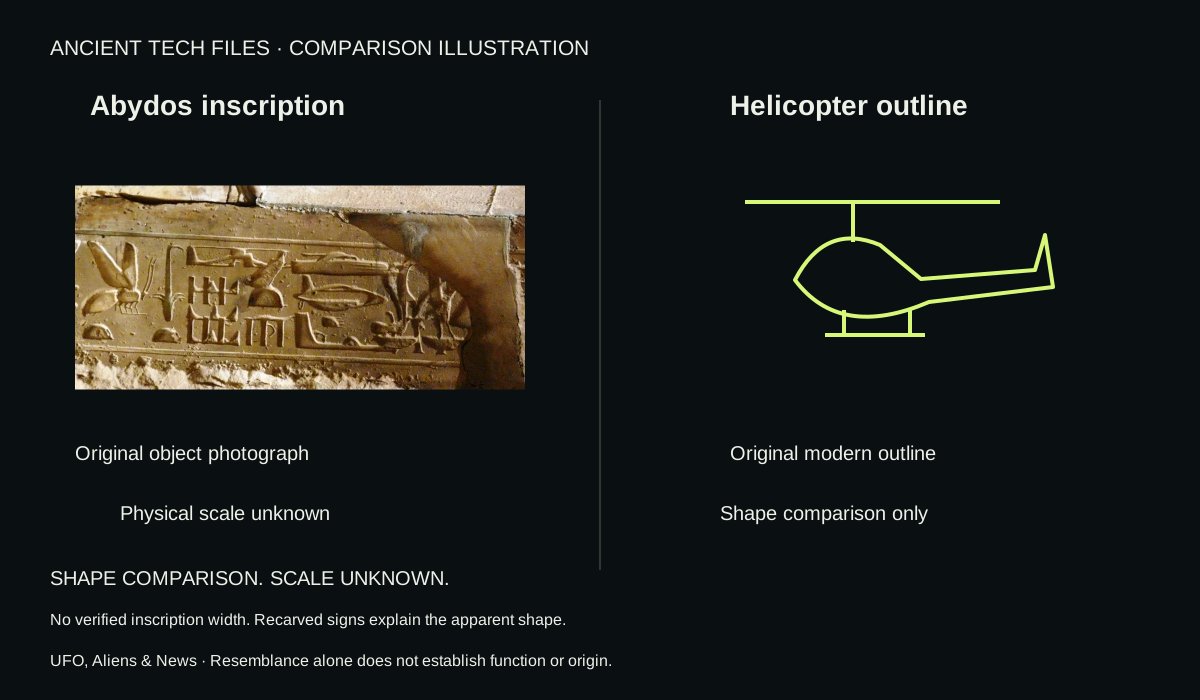
The modern helicopter outline is an unscaled shape comparison. It does not show an excavated aircraft or reconstruct the original carved layers. The explanatory evidence is the inscription history, not the familiarity of the silhouette.
Explore all seven Ancient Tech Files. A matching published Short has not yet been linked. These source pages can be read independently of a video.
Follow the sources
- Joshua Aaron Roberson: Anatomy of a Palimpsest Kmt 27, number 1, 2016, pages 61 to 66; analysis of overlapping royal inscriptions in the Temple of Seti I.
- Egyptian Ministry of Tourism and Antiquities: Karnak Undated official page; includes approximate reign dates for Sety I and Ramesses II. Used only for chronological context, not as a record of the Abydos inscription.
- Olek95: hieroglyphs at Abydos July 2009; original temple photograph released into the public domain by its author.
Each source note identifies the context and evidence it supports. Linked material establishes only the claims described in its source note. Official attribution and publication do not eliminate uncertainty. Read our editorial standard.
This is original, AI assisted research and analysis compiled from the linked sources. It has not received independent expert review. We distinguish source findings from our interpretation and record substantive corrections. Corrections policy