The public record authenticates a January 2015 Navy recording and preserves a 34-second clip. The available file alone does not establish the object’s identity, extraordinary performance or extraterrestrial origin.
GIMBAL is often treated as if one label refers to one settled claim. It does not. There is an official recording, a government release decision, sensor imagery in the clip and many later interpretations. This guide keeps those layers separate so readers can see what the public evidence actually establishes.
Three dates belong on the GIMBAL timeline
The Defense Department’s April 27, 2020 statement says two of the three historical Navy videos it authorized for release were recorded in January 2015. It also says versions of the footage had circulated after unauthorized releases in 2007 and 2017. That makes the recording date, public circulation and official release three different events.
The current DVIDS archive entry was posted March 31, 2025. Its “date taken” field displays January 1, 2015, but the Defense Department’s notice gives only the month. We therefore do not treat the archive’s first-of-month value as proof of an exact encounter day.
What is in the public recording?
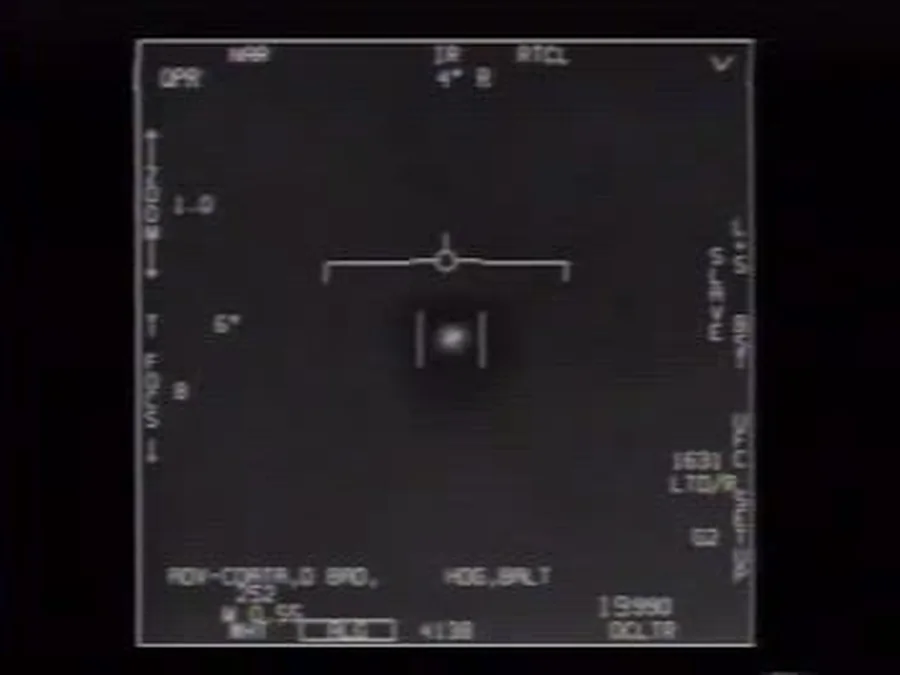
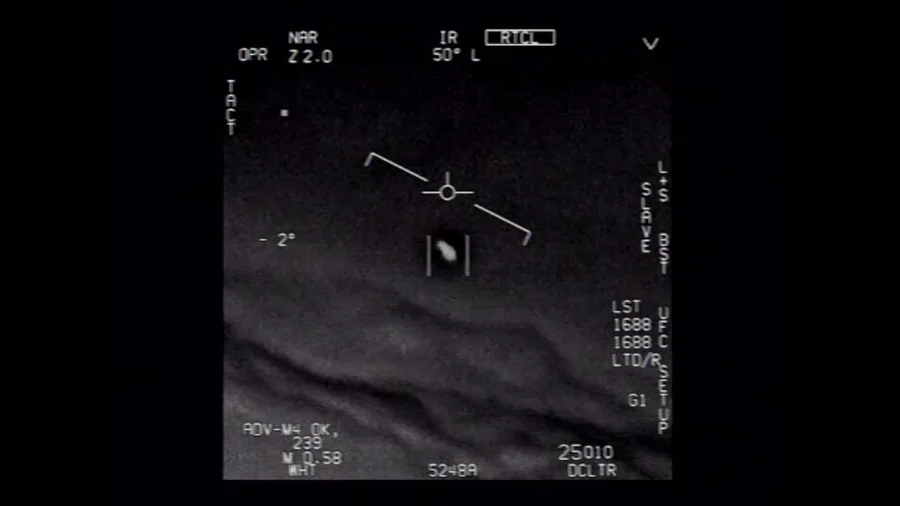
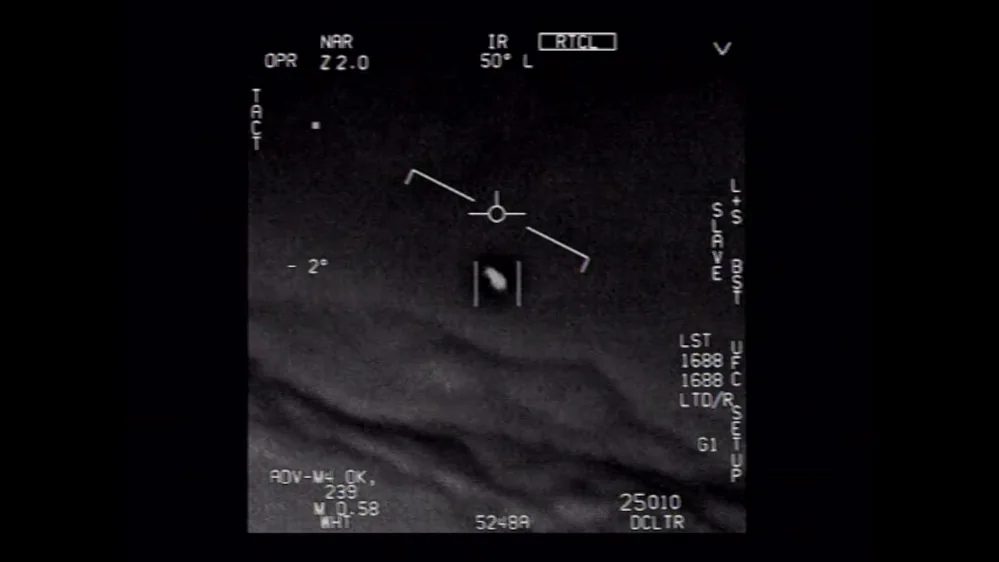
DVIDS identifies the source as Naval Air Systems Command and lists video ID 956955, filename DOD_110891172 and a running time of 34 seconds. Visual playback in the official player shows a monochrome infrared display with a tracked shape near the center and sensor symbology around the frame. This review did not independently transcribe the audio.
Those observations describe the released file. They do not identify any speakers, establish every instrument setting or prove that the object itself rotated in three-dimensional space. A display can record a real target while still requiring additional information to interpret its apparent shape and motion.
What did the 2020 release establish?
The Defense Department said it released the videos to clear up misconceptions about whether the circulating footage was real and whether there was more to the videos. It said the aerial phenomena observed in the videos remained characterized as “unidentified.” In this context, unidentified is an assessment status—not a synonym for alien, spacecraft or impossible technology.
Government provenance matters. It rules out the narrow claim that the familiar clip is merely a fan-made counterfeit presented without an official source. It does not make every caption, recollection or calculation attached to the clip an official finding.
Why can’t the clip alone settle speed, size or distance?
A two-dimensional image records angles and brightness values, not a unique physical distance. Converting apparent motion into speed requires the target range, the observing aircraft’s motion, viewing geometry and reliable timing. Converting angular size into physical size also depends on distance. Sensor mode, image processing and optical behavior can affect apparent shape.
NASA’s 2023 UAP study did not adjudicate GIMBAL. Its general measurement standard is still useful: calibrated instruments, complete metadata and multiple observations make an event more testable. A technically persuasive GIMBAL analysis should expose its inputs, identify measured versus assumed values and carry uncertainty through the result.
What remains established, alleged and unknown?
Established public record: the Navy recording is authentic government footage; the released clip is 34 seconds; the Defense Department associated GIMBAL with its January 2015 set of recordings and authorized public release on April 27, 2020.
Reported reactions: later coverage frequently quotes crew reactions from the clip. We do not rely on a quotation here because an official transcript was not accessible during this review; a real-time reaction would in any event remain distinct from a later technical finding.
Analysis and allegation: claims about extreme speed, unusual rotation, flight against strong wind or a fleet nearby require their own data and sourcing. Repetition in interviews or documentaries does not convert those propositions into measured findings.
Still unknown from the released file: the object’s identity, physical distance and size, and whether the apparent change in orientation maps directly to motion of a physical object. The official sources reviewed for this guide do not establish extraterrestrial origin.
That boundary is not a verdict that the event was ordinary. It is the point at which a preserved observation becomes a testable case: retain the source file, publish the relevant metadata and let competing explanations make predictions against the same evidence.
Watch the original source
Follow the sources
- Naval Air Systems Command / DVIDS: GIMBAL – UAP Official 34-second video record; DVIDS video ID 956955, filename DOD_110891172, repository posting dated March 31, 2025. Visual playback and metadata reviewed October 13, 2026; audio was not independently transcribed.
- Department of Defense: release of historical Navy videos April 27, 2020 authorization; one recording is from November 2004 and two, including GIMBAL, are from January 2015.
- NASA UAP Independent Study Team: final report September 2023; general scientific requirements for calibrated sensors, metadata and reproducible analysis. NASA did not assess GIMBAL in this report.
Each source note identifies the context and evidence it supports. Linked material establishes only the claims described in its source note. Official attribution and publication do not eliminate uncertainty. Read our editorial standard.
This is original, AI-assisted research and analysis compiled from the linked sources. It has not received independent expert review. We distinguish source findings from our interpretation and record substantive corrections. Corrections policy